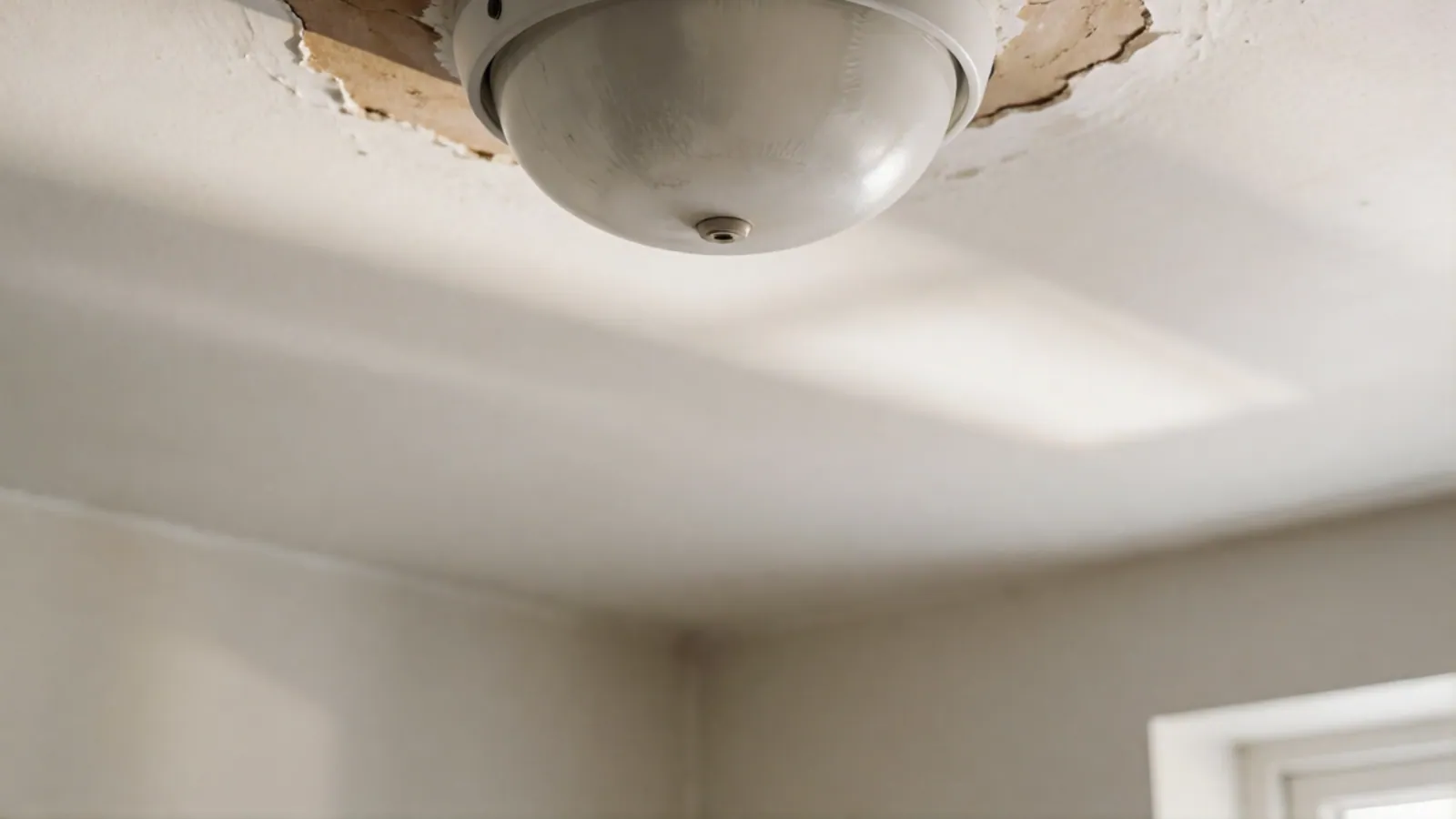
Water coming through the ceiling? The emergency line is answered by a person, 24 hours a day, every day of the year — we tarp and make safe first, and estimate in daylight. Call 000-000-0000
Please stay off the roof. Not in rain, not in wind, not at night, and not to fit a tarp — far more people are hurt each year on wet roofs than by the leaks they were trying to stop. Never touch a ceiling light, fan or outlet that water has reached; switch that circuit off at the panel from dry ground, and if you cannot do that safely, leave it and call an electrician. If a ceiling is bulging or sagging, keep everybody out from under it. General guidance on this page is not a substitute for somebody looking at your own roof.
Step by step
The first fifteen minutes
Done properly, this genuinely reduces what the damage costs — often by more than the repair itself.
Move what matters, then contain it
Get electronics, furniture and anything irreplaceable out from under the drip first. Then put a bucket down and a towel under the bucket — the splash does more to a floor than the drip does.
Turn off the electricity to that area
If water is anywhere near a ceiling light, a fan or an outlet, switch that circuit off at the panel before you go near it. Do not stand in water to reach a switch. If you are unsure which circuit it is, turn off the main.
Pierce a bulging ceiling — deliberately, in one place
A bulge is a pocket of water sitting on plaster or board. Left alone the whole section eventually comes down at once. With a bucket underneath, push a small hole in the lowest point of the bulge with a screwdriver and let it drain in a controlled way.
Photograph everything, before you clean up
Wide shots and close shots of the ceiling, the walls, the floor and anything damaged, with the date on them. Five minutes here is what makes an insurance claim straightforward later.
Look in the attic if you can do it safely
A torch in the attic often shows the wet path far more clearly than the ceiling below does. Note where it is wet, but do not walk between joists on an unboarded floor and never step on the insulation.
Do not go on the roof
Not in the rain, not in the wind, not at night, and not to put a tarp down yourself. More people are hurt each year putting tarps on wet roofs than by the leaks they were trying to stop. This is the part to call us for.
Call us, and say the water is coming in now
Those exact words move the call to the front of the queue. We come out around the clock, make it safe and dry, and leave the estimate for daylight when the roof can actually be assessed.
The one that surprises people
Make a hole in your own ceiling, on purpose
A bulging ceiling is a pocket of water sitting on plaster or board. Left alone, the whole section eventually lets go at once, which is both dangerous and dramatically more expensive to put right than a single small hole.
With a bucket underneath and nobody standing under it, push a small hole through the lowest point of the bulge with a screwdriver and let it drain in a controlled way. If the bulge is large, is over a bed or a stairwell, or you are not confident, leave it, keep everybody out from under it and tell us when you call — this is one of the things that moves a call to the front of the queue.
- Never do this while standing under the bulge.
- Switch off the circuit first if there is a light or a fan anywhere near it.
- Use a bucket, not a bowl — a ceiling pocket holds far more water than it looks like it does.
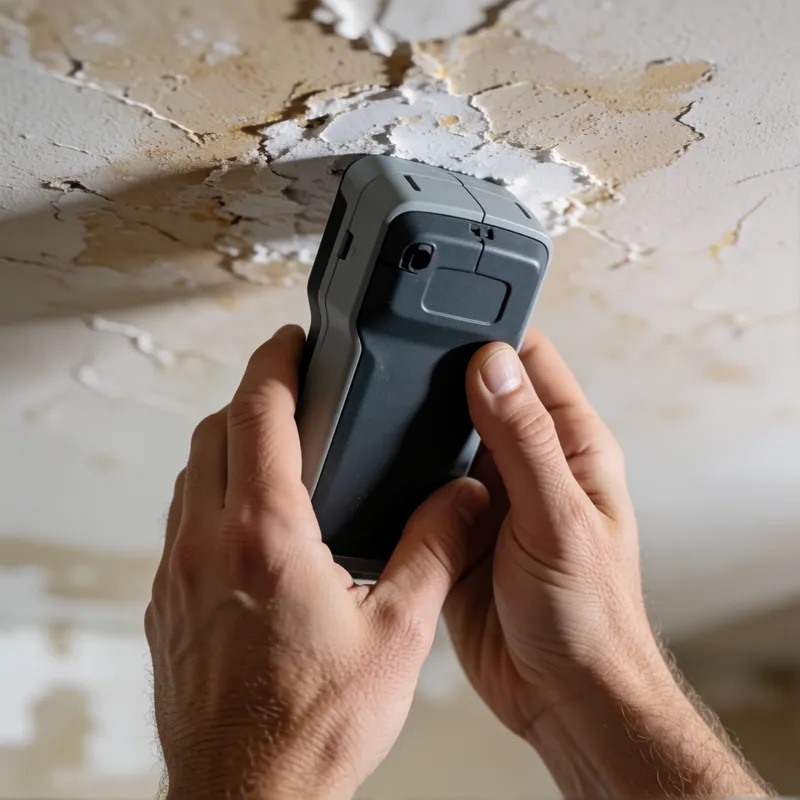
Before you call
What to tell us, and what it changes
Four pieces of information decide whether you need somebody tonight or in the morning, and they are all things you already know.
When does it leak?
Only in heavy rain points at a valley, a blocked gutter or a drain. Only with wind from one direction points at a wall or a parapet rather than the roof. In cold, dry weather with no rain at all is almost certainly attic condensation, which is a ventilation problem and not a leak.
How much water?
A slow drip into a bucket in a spare room is a next-day job and we will say so rather than charge you an after-hours rate. Water running down a wall or through a light fitting is not.
Where is it, relative to people?
Over a bed, a stairwell or a consumer unit moves the call up the queue immediately. So does a ceiling that is sagging.
Has anything happened recently?
A storm, work on the roof, a new skylight, scaffolding next door, or a tree limb down. It very often narrows the search from the phone.
Afterwards
Once the water has stopped
Do not repaint straight away
Everything above the ceiling needs weeks to dry properly. Repainting early traps moisture and, worse, hides the evidence — a stain that reappears through fresh paint is genuinely useful information that water is still getting in.
Dry it out properly
Air movement and a dehumidifier if you have one. Wet insulation in a ceiling void is what turns a leak into a mould problem over the following month.
Keep the photographs
Dated, from before you cleaned up. They are what makes an insurance claim straightforward, and they cannot be recreated later.
Get the roof looked at even if it stopped
A leak that stops when the rain stops has not fixed itself. It has simply run out of water, and it will do exactly the same thing next time.
Ask for the entry point to be proven
Not sealed near. A repair somebody can point at is a repair somebody can warrant.
Right now
Water coming in? Call, do not send a message
The emergency line is answered by a person at any hour of any day. We tarp and make safe first and estimate in daylight — there is no contract to sign at midnight.