
Water coming through the ceiling? The emergency line is answered by a person, 24 hours a day, every day of the year — we tarp and make safe first, and estimate in daylight. Call 000-000-0000
Gutters get treated as an accessory. They are drainage infrastructure, and a roof is a device for delivering an extraordinary volume of water to them very quickly — an inch of rain on a modest Queens row house roof is well over a thousand gallons. If that volume cannot leave cleanly, it goes over the back of the gutter into the fascia, down the wall, into the soffit, and eventually into the building.
Which is why we treat gutter work as roofing rather than as a bolt-on. Size, pitch, hanger spacing, outlet count, downspout diameter and — the part everybody forgets — where the water actually goes once it reaches the ground. A downspout discharging two feet from a wall is a basement problem being manufactured one storm at a time.
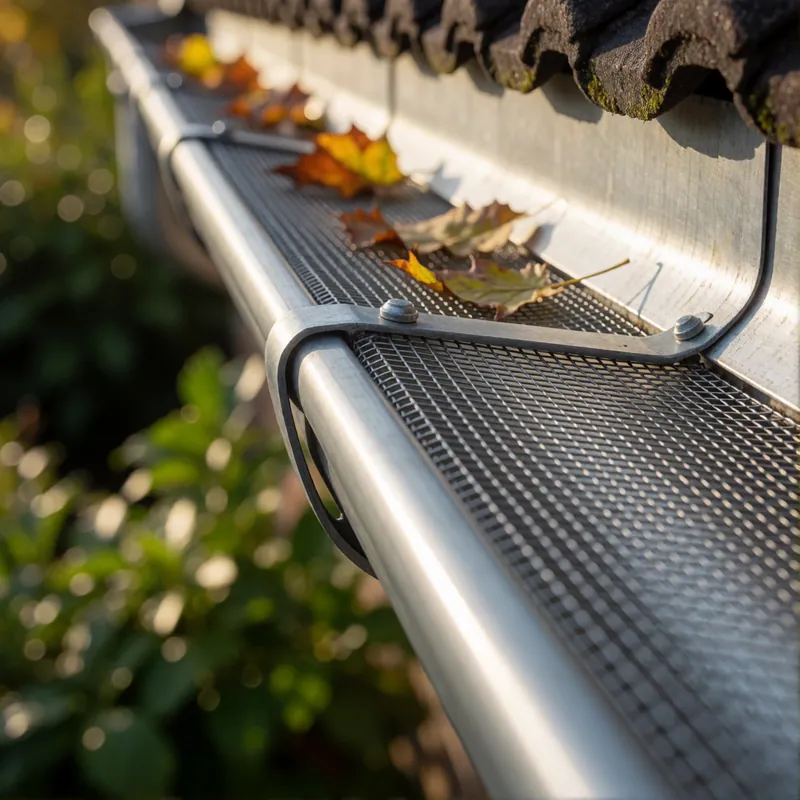
Gutters, properly specified
Six inches of gutter hung well beats five inches hung badly every time, and the price difference is small.
Seamless, formed on site
Rolled to the exact length of the run from a coil, so the only joints are at corners and outlets. A sectional gutter has a joint every ten feet and every joint eventually leaks.
Correctly sized
Five-inch is standard; six-inch on large or steep roofs, on north-facing runs that shed a lot at once, and anywhere the existing gutter has visibly overflowed.
Pitched to the outlets
About a quarter-inch of fall every ten feet. Too little and it holds water and silt; too much and it looks wrong and overshoots at the outlet.
Hidden hangers into the rafter tails
Screwed into structure at 24 inches, closer where snow load justifies it. Not spikes into a soft fascia board.
Enough downspouts
One outlet per 35 to 40 feet of run as a minimum, and more on steep or large roofs. Undersized outlets are the most common reason a correctly-sized gutter still overflows.
Leaf protection where it earns its place
A fine mesh guard on a run under mature trees genuinely reduces cleaning. It does not eliminate it, and anyone selling a guard as 'never clean your gutters again' is overselling.
Where the water goes next
The part of the job that gets skipped, and the part that causes basement damp.
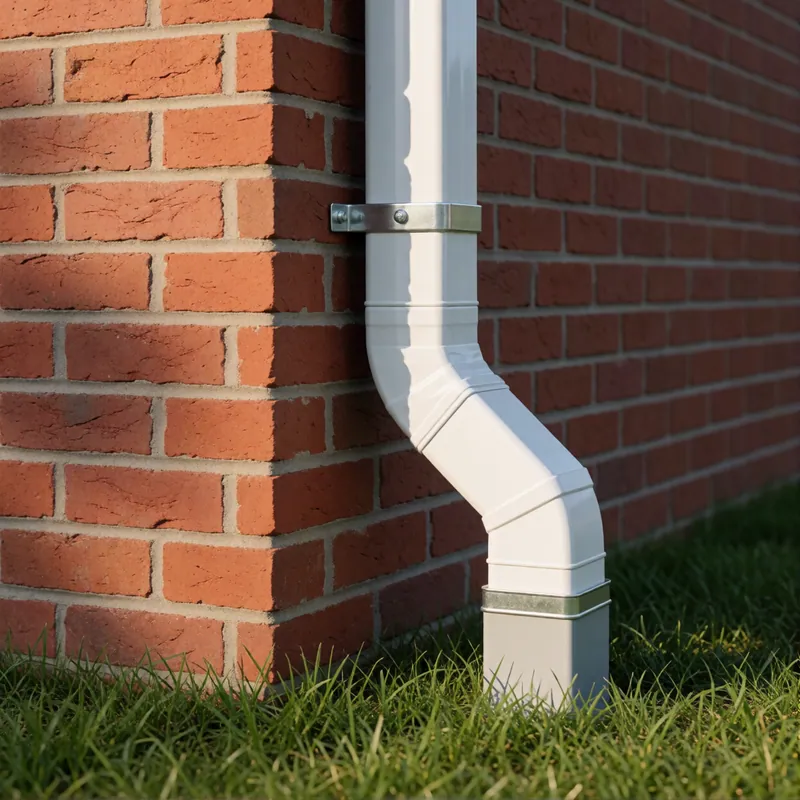
Downspout discharge
At least four to six feet from the wall, onto a splash block or an extension. Discharging at the foundation is how you produce a wet basement from a perfectly good roof.
Underground leaders
Common on Queens row houses and frequently blocked or collapsed after decades. We can camera them, jet them, or re-route to a surface discharge where the buried line has failed.
Roof drains on flat roofs
The bowl, the clamping ring, the strainer dome and the flashing around it. The highest-value maintenance item on any flat roof.
Scuppers and overflows
The secondary path when the primary drain blocks. Every flat roof should have one and a great many older ones do not — which is how a blocked drain becomes a structural load.
Internal leaders
Vertical pipes running inside the building from a roof drain. When these block or leak the damage appears in the middle of the building, which makes them badly worth maintaining.
Grading at the wall
Ground sloping toward the building undoes good drainage above it. We will point it out even though it is not our trade.
Cleaning, and how often
The honest answer depends on your trees, not on a schedule somebody sells you.
Twice a year, minimum
Late spring after the blossom and seed, and late autumn after the last leaves. One clearing in October is not enough on a street with mature trees.
Cleared by hand, then flushed
Debris out by hand, then water run to prove each downspout actually takes it. Blowing debris off a roof and calling it done proves nothing.
Downspouts proven, not assumed
A gutter can be spotless and still overflow because the outlet below it is packed solid. This is the check that gets skipped.
Check the hangers while you are up there
Pulled hangers and sagging runs are cheap to fix at a cleaning visit and expensive after a winter of standing water in the gutter.
After any storm with wind
A single storm can fill a gutter with twigs and shingle granules in an hour.
Never with a pressure washer
It drives debris into the outlet, damages the seams and strips granules off the roof edge.
Gutters & Drainage in western Queens
Seamless gutters, downspouts, leaders and roof drains — because most 'roof leaks' in Queens are water that could not get away.
Every job of this kind starts the same way: somebody climbs it, photographs it, and writes down what is actually wrong before anybody quotes a price. The survey is free, the report is yours, and you are under no obligation to use us for the work it recommends.
Questions
Gutters & Drainage — the questions we are asked most
How often should gutters be cleaned in Queens?
Twice a year as a minimum — late spring after blossom and seed drop, and late autumn after the last leaves. On a street with mature trees, three times is more realistic, and any storm with real wind is worth a look afterwards. A single storm can fill a gutter in an hour.
Are gutter guards worth it?
A good fine-mesh guard on a run under heavy tree cover genuinely reduces how often you need cleaning and stops the outlets blocking, which is the failure that actually causes damage. It does not eliminate maintenance — fine grit and shingle granules still get through and need flushing. Anyone selling a guard as 'never clean your gutters again' is overselling it.
Why do my gutters overflow even though they are clean?
Usually not enough outlets, or an outlet or underground leader that is blocked below the point you can see. Sometimes the gutter is simply undersized for a steep or large roof that sheds a lot of water at once. All three are diagnosable in a single visit and none of them are fixed by cleaning.
Should I replace gutters at the same time as the roof?
If they are over about fifteen years old, yes — the access, the ladders and the crew are already there, so doing both together costs meaningfully less than doing them separately. It is also the only moment the drip edge, fascia and gutter can be detailed as one system.
Can a blocked gutter really cause a roof leak?
Routinely. Water backs up over the rear of the gutter into the fascia and soffit, rots the timber and works into the roof edge, and in winter freezes there and forces water back under the shingles. A meaningful share of ceiling stains we investigate turn out to be exactly this rather than a failure of the roof surface.
What is a scupper and does my flat roof need one?
A scupper is an opening through a parapet that lets water off the roof — usually as an overflow when the primary drain blocks. Every flat roof should have a secondary drainage path, and many older Queens buildings do not. Without one, a blocked drain in a long storm turns thousands of gallons into a structural load.
Do you clear underground leaders?
Yes. We can camera them to see what the problem actually is, jet them clear where the pipe is sound, and where a buried line has collapsed we will discuss re-routing to a surface discharge, which is usually far cheaper than excavating and often works better.
Related
Often needed alongside this
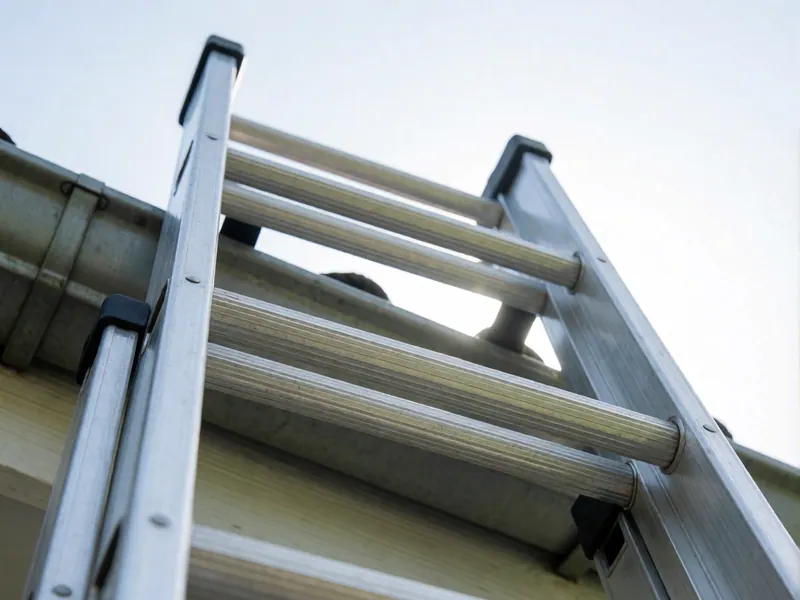
Maintenance & Protection
Roof Maintenance Plans
Two or four visits a year that catch the small thing before it becomes the ceiling — and typically add a decade to a roof.
Read more
Maintenance & Protection
Inspections & Roof Planning
Condition surveys, drone and moisture inspections, and the remaining-life report that lets you plan a roof instead of reacting to one.
Read more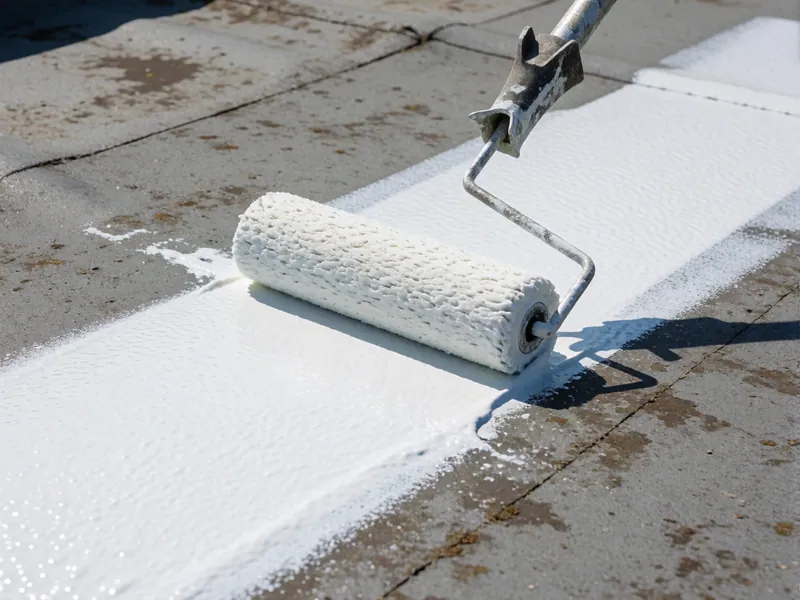
Maintenance & Protection
Coatings & Waterproofing
Reflective coatings that buy a sound flat roof another decade and cut cooling costs — quoted only after a dry moisture reading.
Read moreFree survey, written quote, fixed price
Get a roof quote, or call the 24-hour line
Tell us what you are seeing and we will tell you honestly whether it needs somebody tonight or whether it will keep until the morning. Surveys and written quotes are free, and leak diagnostics are $145, credited in full against any repair you approve.