Water coming through the ceiling? The emergency line is answered by a person, 24 hours a day, every day of the year — we tarp and make safe first, and estimate in daylight. Call 000-000-0000
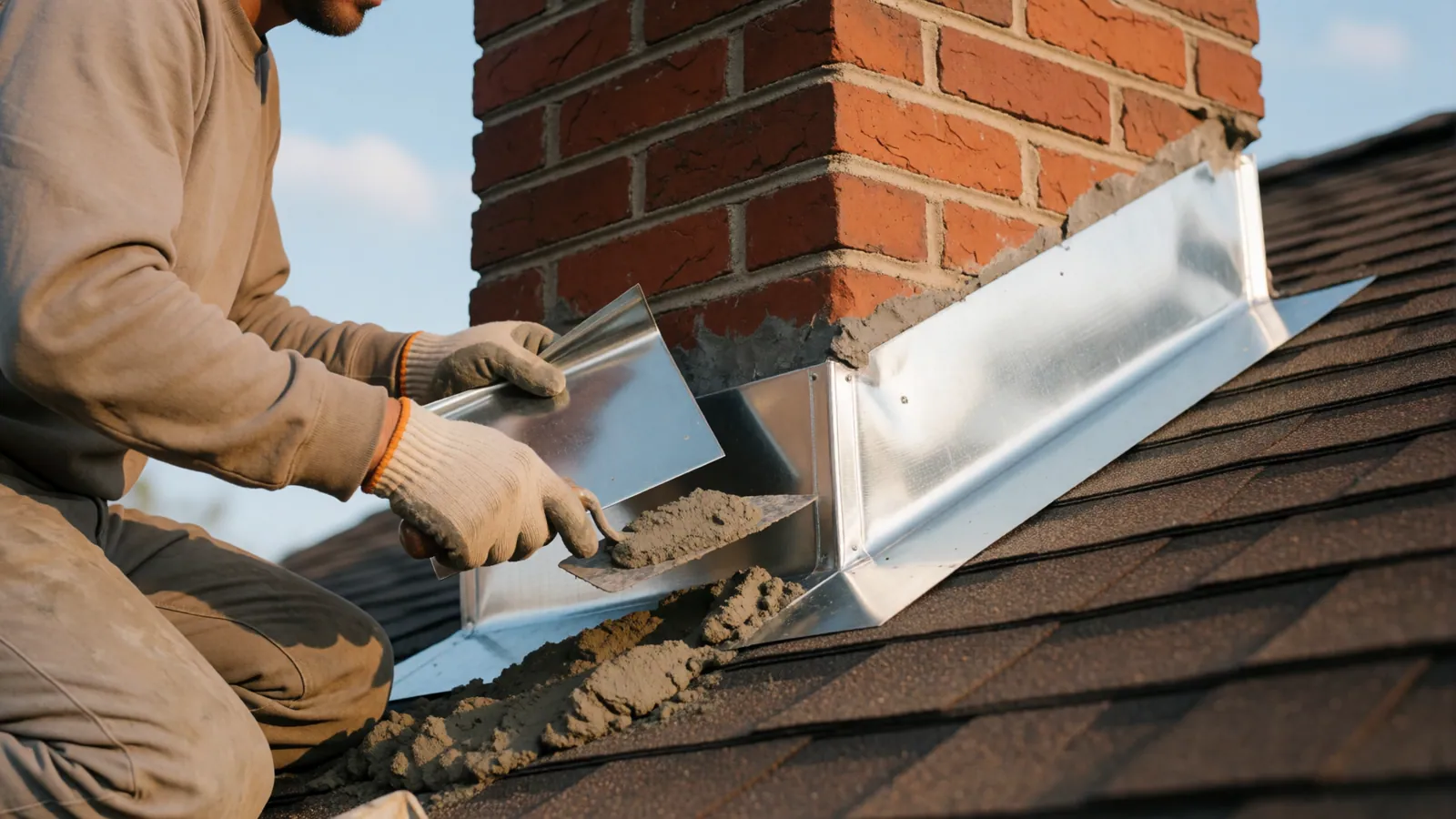
Flashing is the sheet metal that bridges the gap between a roof surface and anything interrupting it. Done properly it is a layered, overlapping system that lets water find its way back out onto the roof. Done improperly it is a bead of sealant, and sealant has a life of a few years while the roof it is protecting has a life of decades.
Roofing sealant has its place — as a secondary defence on a correctly flashed detail. When it is the primary defence, you have a leak scheduled for some point in the next three winters. A great many of the chimney leaks we are called to are exactly this: a previous repair that consisted entirely of black mastic smeared where two things meet.
The details we rebuild
Each of these is a specific assembly with a specific right answer, not a general area to be sealed.
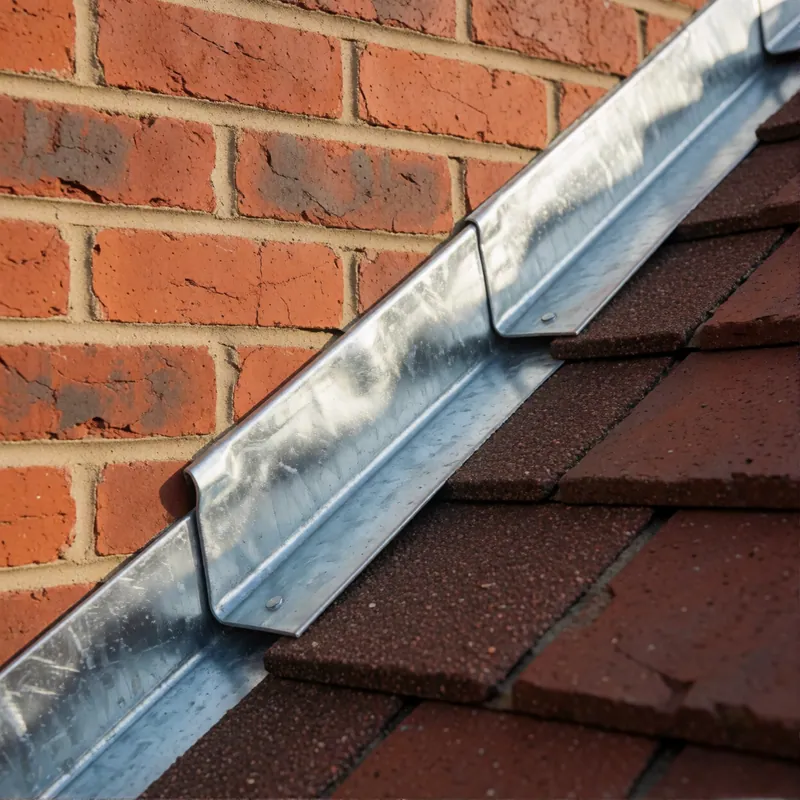
Step flashing at walls
Individual L-shaped pieces woven in with each shingle course, one per course, so water is stepped back out onto the roof. A single long strip of metal run up the junction — very common on older work — will leak.
Counter-flashing at chimneys
Metal cut into a mortar joint and folded down over the step flashing. If it is surface-mounted and caulked rather than let into the brick, it is a temporary repair whatever it cost.
Chimney crowns
The sloped concrete cap on top. Cracked crowns let water into the masonry itself, which then freezes, expands and destroys the chimney from the inside. Rebuilt with a proper overhang and a drip edge.
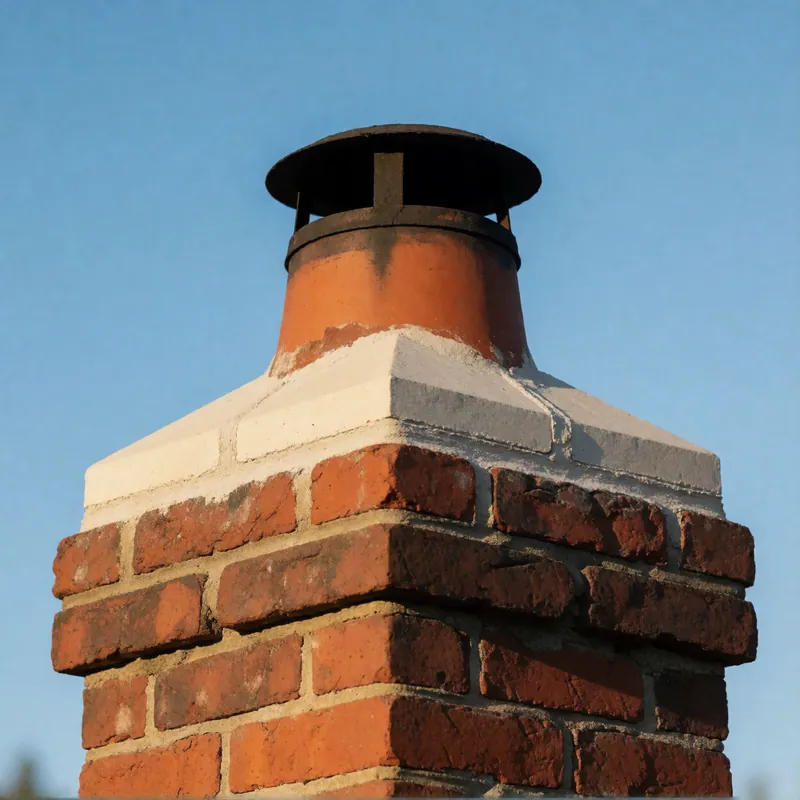
Chimney caps
A cap over the flue keeps rain out of the chimney entirely and keeps birds out with it. An uncapped chimney is one of the more common causes of staining around a chimney breast.
Valley metal
Where two roof planes meet. Carries the most water on the roof and wears out first.
Skylight flashing
The kit around the unit — apron, side and head flashing. Rarely the glass, almost always the metal or a site-built kerb with no head flashing at all.
Pipe boots and vent collars
The rubber collar around a plumbing vent, which perishes in 10 to 15 years. Cheap, quick, and a very frequent cause of a ceiling stain.
Drip edge and rake edge
The metal at the eaves and gable ends that stops water curling back into the fascia. Routinely omitted on older roofs.
Masonry work that goes with it
On a Queens chimney the brickwork and the flashing fail together, and repairing one without the other is money spent twice.
Re-pointing
Raking out failed mortar joints and re-pointing with a mortar matched to the original. Hard modern mortar on soft old brick damages the brick — it is the mortar that is supposed to be sacrificial.
Crown rebuild
Removing a cracked crown and casting a new one with a proper slope, an overhang beyond the brick face, and a drip edge so water leaves rather than running down the stack.
Waterproofing the stack
A breathable masonry treatment that sheds water while letting the brick dry. Never a film-forming sealer, which traps moisture inside and spalls the face off in the first hard freeze.
Rebuilding above the roof line
Where the top few courses have deteriorated badly, taking them down and rebuilding is often cheaper than repeated repairs.
Parapet and coping joints
On flat roofs, the joints between coping stones — a classic and much-misdiagnosed source of top-floor leaks.
How to tell your flashing is the problem
A few signs that point at a junction rather than the roof surface.
The stain is beside a chimney or a wall
Not in the open ceiling. Water travels, but a stain that sits consistently near a junction is a strong hint.
Visible sealant on the roof
Black mastic smeared at a junction is somebody's previous repair. It is now the thing keeping water out, and it will not for long.
Rust streaks below a detail
Old galvanised flashing corroding. Once it has rusted through it is doing nothing at all.
A leak that only appears in driving rain
Wind-driven water gets under a marginal flashing that ordinary vertical rain never reaches.
Damp on the chimney breast inside
Frequently an uncapped flue or a failed crown rather than the roof junction, and worth separating before anyone starts work.
White staining on the brickwork
Efflorescence — salts carried out of saturated masonry. It tells you the chimney is holding water, which is a crown or a pointing problem.
Flashing & Chimney Repair in western Queens
The junctions where roofs actually leak — chimneys, walls, valleys and skylight kerbs — renewed rather than sealed over.
Every job of this kind starts the same way: somebody climbs it, photographs it, and writes down what is actually wrong before anybody quotes a price. The survey is free, the report is yours, and you are under no obligation to use us for the work it recommends.
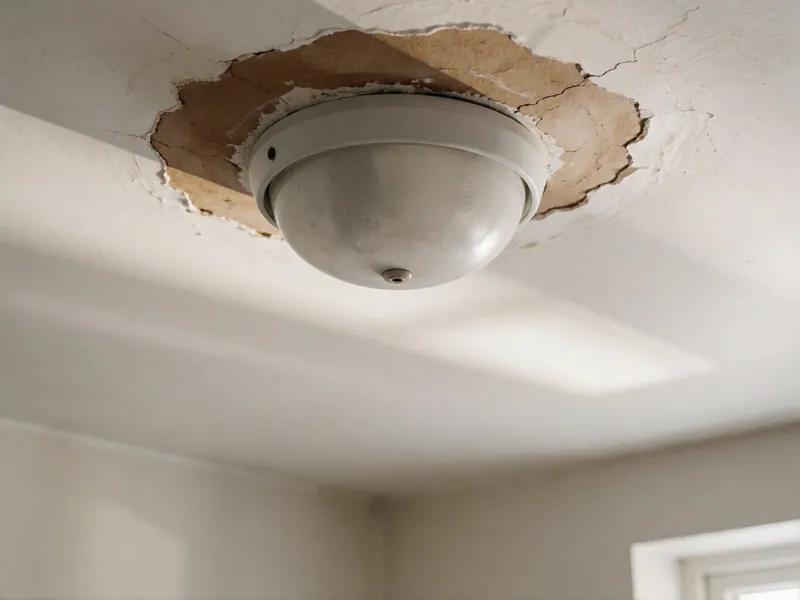
Please stay off the roof. Not in rain, not in wind, not at night, and not to fit a tarp — far more people are hurt each year on wet roofs than by the leaks they were trying to stop. Never touch a ceiling light, fan or outlet that water has reached; switch that circuit off at the panel from dry ground, and if you cannot do that safely, leave it and call an electrician. If a ceiling is bulging or sagging, keep everybody out from under it. General guidance on this page is not a substitute for somebody looking at your own roof.
Questions
Flashing & Chimney Repair — the questions we are asked most
Why does my chimney leak when the roof is new?
Because the flashing was re-used. It is the most common corner cut in a re-roof: the shingles are new, the metal at the chimney is thirty years old and was bent back and re-laid. A proper job renews every flashing on the roof, and any quote worth comparing says so explicitly.
What is the difference between step flashing and counter-flashing?
Step flashing is the L-shaped pieces woven in with each shingle course, carrying water back out onto the roof. Counter-flashing is the metal let into a mortar joint in the brickwork and folded down over the top of the step flashing, so water cannot get behind it. You need both. Sealant instead of either is a temporary repair.
Can you just seal it?
We can, and occasionally as a genuine stopgap we will — before a storm, or to get a building through to a scheduled repair. But sealant has a life of a few years and the roof has a life of decades, so as a permanent answer it simply schedules the leak for a later date.
How much does chimney flashing repair cost?
Renewing chimney flashing properly, with counter-flashing cut into the brick, starts around $950. A crown rebuild starts around $1,150 and re-pointing above the roof line around $850. Where two of the three are needed we price them together — the scaffold and the access are the same.
My chimney is not used any more. Does it still matter?
Yes. An unused chimney still takes water in through the crown and the flue and still transmits it into the building. Capping it, repairing the crown and pointing it are worth doing, and if you never intend to use it, removing it to below the roof line and roofing over is often the cheapest permanent answer.
What is the white powder on my brickwork?
Efflorescence — salts carried to the surface as water moves through saturated masonry and evaporates. It is not damaging in itself but it tells you the brick is holding water, which usually means a failed crown, failed pointing or a missing cap. Worth acting on before a freeze.
Do you do the masonry as well as the flashing?
Yes — pointing, crowns, caps, and rebuilding the top courses of a stack. On a chimney they are one job. Sending a roofer and a mason separately means paying twice for the same access and getting two people who can each blame the other.
Related
Often needed alongside this
Leaks & Repairs
Roof Leak Repair
Finding where the water actually gets in — proven with a hose test, not guessed at — and then fixing that, once.
Read more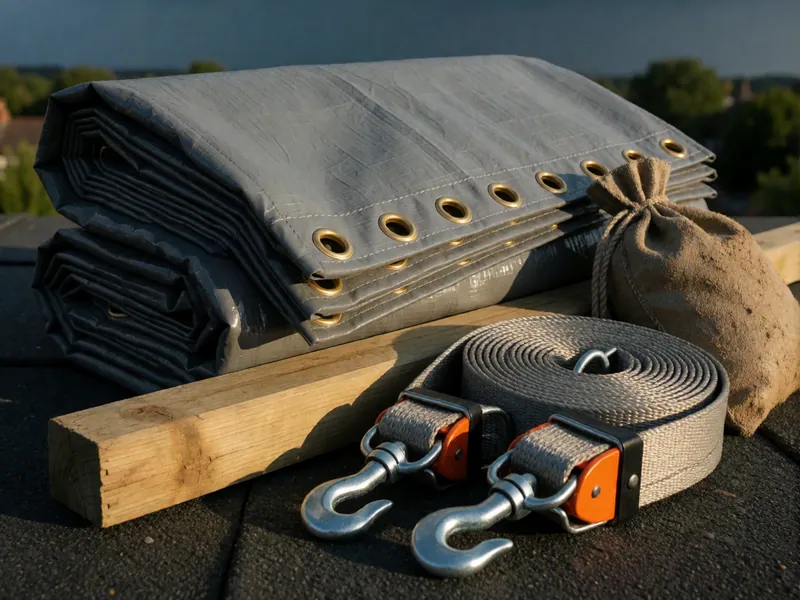
Leaks & Repairs
24/7 Emergency Roofing
Tarped and made safe around the clock — we stop the water first and estimate in daylight, when the roof can actually be assessed.
Read more
Leaks & Repairs
Storm & Wind Damage
Wind, hail and impact damage assessed and documented properly at the time of loss — which is what makes a claim straightforward.
Read moreFree survey, written quote, fixed price
Get a roof quote, or call the 24-hour line
Tell us what you are seeing and we will tell you honestly whether it needs somebody tonight or whether it will keep until the morning. Surveys and written quotes are free, and leak diagnostics are $145, credited in full against any repair you approve.