Water coming through the ceiling? The emergency line is answered by a person, 24 hours a day, every day of the year — we tarp and make safe first, and estimate in daylight. Call 000-000-0000
The skylights that give the trade its reputation were fitted in the seventies and eighties, frequently as an afterthought, on a site-built kerb with sealant doing the waterproofing. Twenty years later the sealant had failed and the roof around it had not, and everyone concluded that skylights leak.
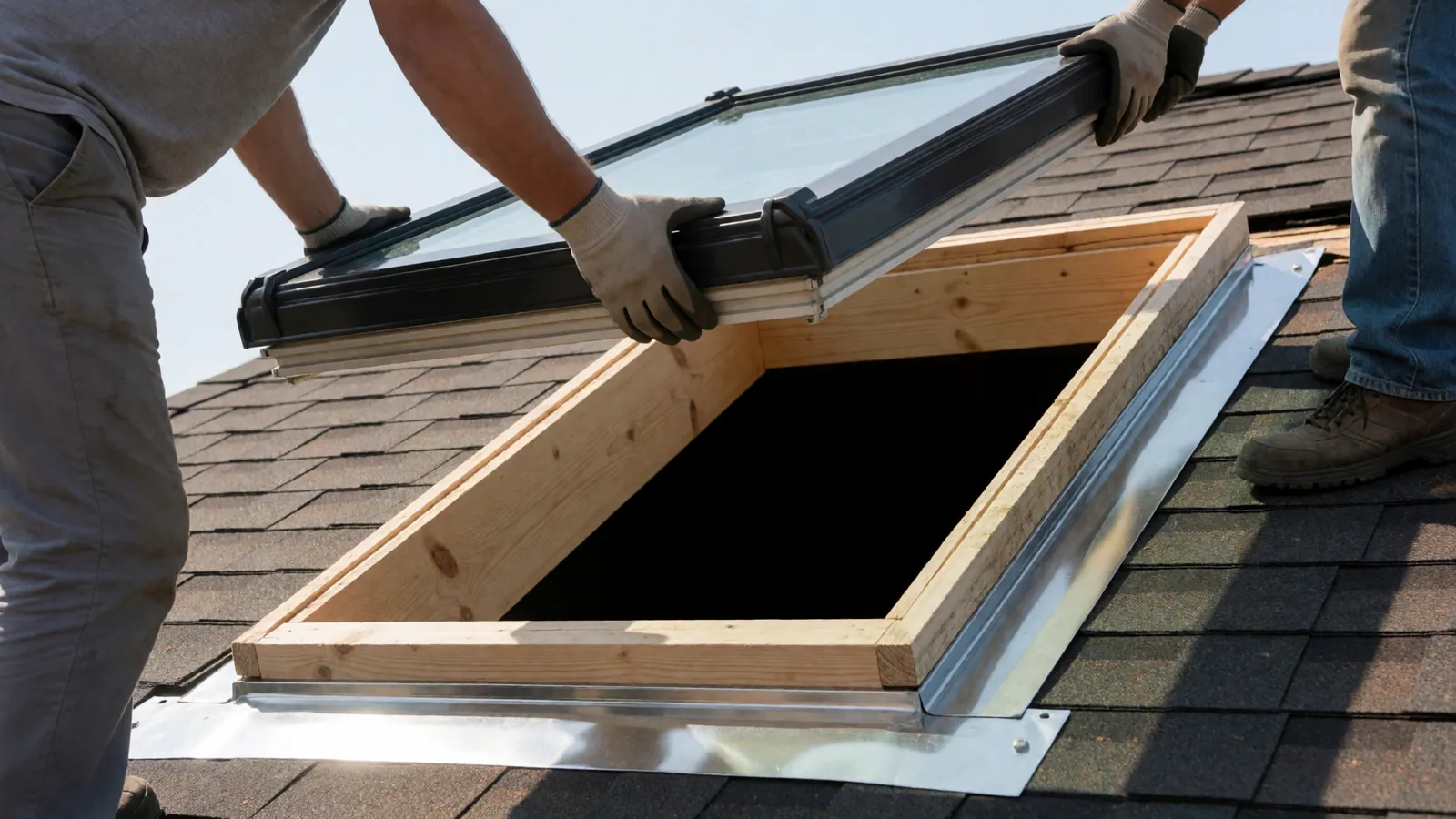
A modern unit installed with the manufacturer's flashing kit — an apron at the bottom, step flashing up the sides, a head flashing at the top, all woven into the roof covering — is a detail like any other, and it lasts like one. The two rules are: use the kit that matches the roof covering, and fit it while the roof around it is being worked on rather than cutting into a finished roof.
What we fit
Chosen for the room below and the roof above, in that order.
Deck-mounted skylights
The unit sits low on the roof deck for a sleek profile. Our default on a pitched roof being re-covered, because the flashing kit integrates with the new covering perfectly.
Curb-mounted skylights
The unit sits on a raised kerb. Necessary on low-slope roofs, and the right answer where an existing kerb is sound and being re-used.
Fixed and venting units
A venting skylight adds real summer airflow to a top-floor room. Manual, electric or solar-powered, most with a rain sensor that closes them for you.
Sun tunnels
A reflective tube from a small roof dome down to a diffuser in the ceiling. Remarkable for a windowless bathroom, hallway or stair — a fraction of the cost and disruption of a skylight, and no structural work.
Flat-roof skylights and hatches
Domes, flat glass units and access hatches, kerbed and flashed properly into the membrane.
Glass and blind upgrades
Laminated glass overhead as standard, low-E coatings, and integrated blinds that are far easier to fit with the unit than to retrofit later.
Why skylights leak, and how we fix them
In order of how often we find each one.
Failed or improvised flashing
By far the commonest. Site-made metal or, worse, sealant instead of a proper kit. Fixed by fitting the correct flashing kit for the roof covering.
No head flashing
The upper edge is where the most water arrives. A kerb built on site frequently has an apron and sides but nothing across the top.
A failed seal in the unit
Condensation or misting between the panes. That is the glazing unit itself, not a leak, and it means the unit has reached the end of its life.
Condensation mistaken for a leak
Water on the inside of the glass in a bathroom or kitchen on a cold day is room humidity, not roof water. Ventilation solves it; sealant does not.
Perished gaskets
The rubber seals on an older unit harden and shrink. Sometimes replaceable, often the point at which replacing the unit is the better value.
Ice damming above the unit
Snow and ice building against the upper edge and forcing water back under the flashing. An insulation and ventilation issue rather than a skylight one.
Practical points before you commit
The things worth thinking about before, rather than after.
North-facing gives even light, south-facing gives heat
North light is soft and constant all day. South is bright and warm and, on a top floor in August, can be too much of both without a blind or a low-E coating.
Fit it with the roof if you can
Adding a skylight during a re-roof is dramatically cheaper and produces a better detail than cutting into a finished roof afterwards.
The shaft matters as much as the unit
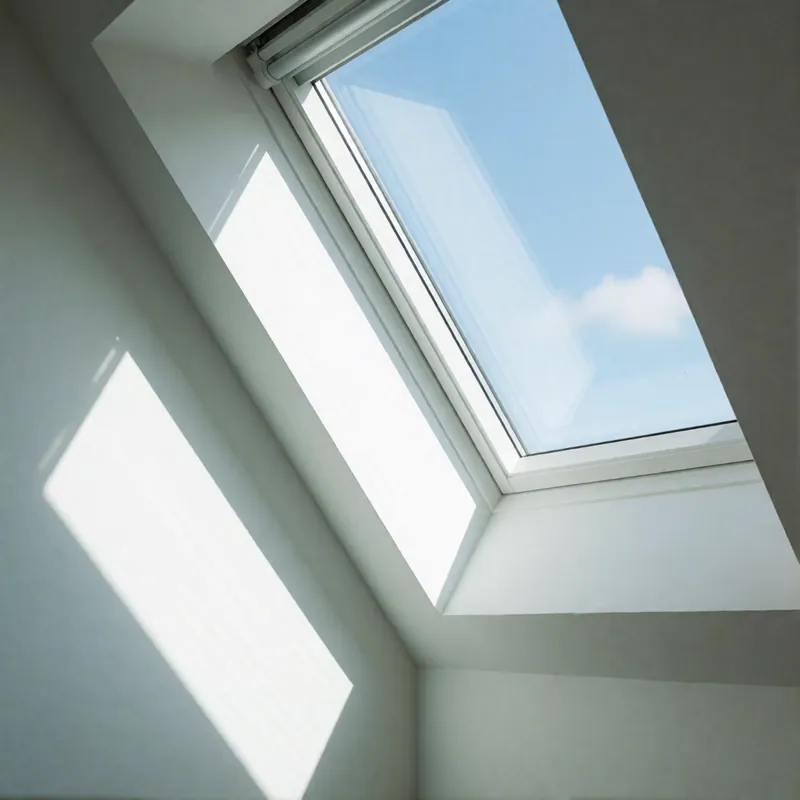
Between the roof and the ceiling is a lined shaft. Splayed outward it throws far more light into the room than a straight one, and it wants insulating properly or it will condense.
Rafters can usually be worked around
Most units fit between existing rafters. A wider unit needs a header and trimmers — straightforward, but it is carpentry and it belongs in the quote.
Consider a sun tunnel first
For a small dark room, a sun tunnel gives a startling amount of daylight for a fraction of the cost and disruption, with no structural work at all.
Flat roofs need a kerb
A unit must sit above the water line on a low-slope roof. A skylight set flat into a membrane roof is a puddle waiting to happen.
Questions
Skylights & Roof Windows — the questions we are asked most
Do skylights always leak eventually?
No — that reputation comes from decades of units fitted on site-built kerbs with sealant doing the waterproofing. A modern unit installed with the manufacturer's flashing kit, integrated into the roof covering, is a detail like any other and lasts like one. Essentially every leaking skylight we attend is a flashing problem, not a skylight problem.
Why is my skylight leaking?
Most likely the flashing rather than the unit — particularly the head flashing at the upper edge, which is where the most water arrives and which site-built installations routinely omit. If you are seeing misting between the panes rather than water running in, that is a failed glazing seal and it means the unit itself has reached the end of its life.
Can you add a skylight to my existing roof?
Yes, though it is meaningfully cheaper and produces a better detail if it is done as part of a re-roof. Most units fit between existing rafters without structural work; a wider unit needs a header and trimmers, which we price in the quote rather than discovering on the day.
How much does a skylight cost installed?
A fixed deck-mounted unit runs $1,650 to $2,600 including the flashing kit and all roof work; a venting unit $2,200 to $4,300 depending on how it opens. A sun tunnel is $1,150 to $1,750 and for a small dark room it is frequently the better buy.
What is a sun tunnel?
A small dome on the roof feeding a highly reflective tube down to a diffuser in the ceiling below. It brings a genuinely surprising amount of daylight into a windowless bathroom, hallway or stair, needs no structural work, and costs a fraction of a skylight. It is the answer we suggest most often for small interior rooms.
Will a skylight make the room too hot?
It can, on a south-facing slope on a top floor. Low-E coated glass handles most of it, and an integrated blind handles the rest — both far easier and cheaper to specify with the unit than to retrofit. A venting unit also lets accumulated heat out, which a fixed one cannot.
My skylight is misting between the panes. Can it be repaired?
No. That is the seal on the sealed glazing unit having failed, and it means the unit has reached the end of its service life. Replacing it like for like is straightforward — usually from $1,450 with a new flashing kit — and modern glazing performs considerably better than whatever is in there now.
Related
Often needed alongside this

Specialist, Commercial & Systems
Slate & Tile Roofing
Slate, clay and concrete tile repaired and re-laid by people who know that the flashing usually fails fifty years before the slate does.
Read more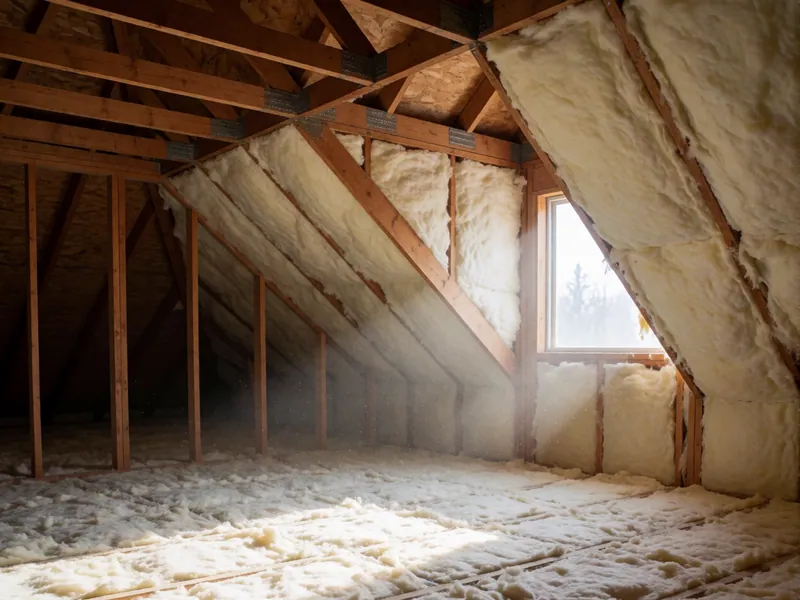
Specialist, Commercial & Systems
Attic Ventilation & Insulation
Balanced intake and exhaust — the single biggest factor in how long a roof lasts, and the reason ice dams form at all.
Read more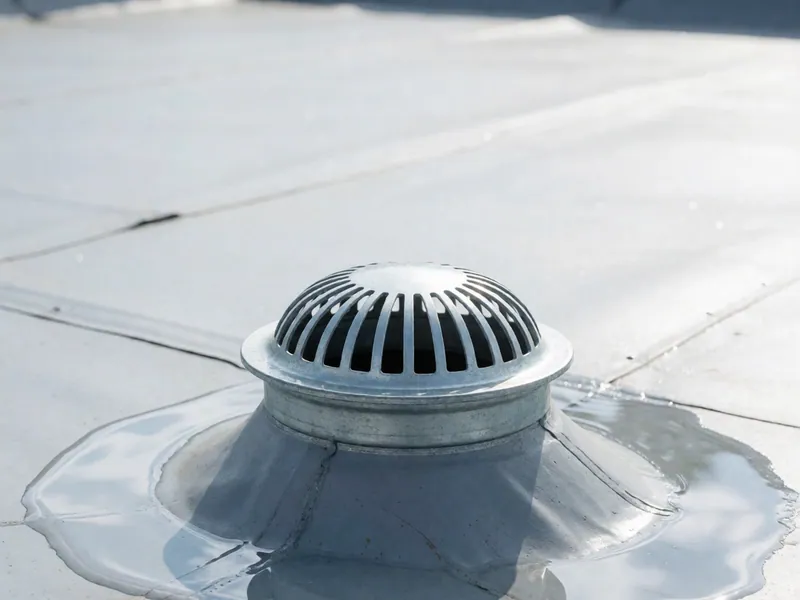
Specialist, Commercial & Systems
Commercial & Multi-Family
Flat roofs on occupied buildings, managed as an asset — surveys, planned maintenance, and work sequenced around tenants.
Read moreFree survey, written quote, fixed price
Get a roof quote, or call the 24-hour line
Tell us what you are seeing and we will tell you honestly whether it needs somebody tonight or whether it will keep until the morning. Surveys and written quotes are free, and leak diagnostics are $145, credited in full against any repair you approve.