Before anything else
The material matters less than you have been led to believe
On a pitched roof, the three things that decide how long it lasts are the nailing, the flashing and the ventilation — none of which appear on any brochure. A premium shingle installed with re-used flashing over an unventilated attic will be finished long before a mid-range shingle installed properly. Choose the material second.
Pitched roofs · $ · 22 – 30 years
Architectural asphalt shingle
Best for
Row houses, single-family and two-family homes — the default for most of Woodside.
What is good about it
Far and away the best value per year of service life. Wide colour choice, quick to install, easy and cheap to repair, and every roofer in the city can work on it.
What to watch
It is a petroleum product on a hot roof: without proper attic ventilation underneath, a thirty-year shingle can behave like a fifteen-year one. Ventilation is not an upsell here, it is the warranty.
Flat and low-slope · $$ · 20 – 30 years
Single-ply membrane (TPO / EPDM)
Best for
Flat roofs on apartment buildings, mixed-use, retail and commercial.
What is good about it
Fully welded seams, a light-coloured surface that cuts cooling load, and a roof that can be walked and worked on without damaging it. Repairs are clean and quick.
What to watch
It is only as good as its detailing. Almost every membrane failure we are called to is at a seam, a termination bar, a drain or a pipe penetration — never in the middle of the field.
Flat and low-slope · $$ · 15 – 25 years
Modified bitumen / built-up
Best for
Older Queens flat roofs, and buildings where the existing build-up is being matched.
What is good about it
Tough, multi-layered and forgiving of foot traffic. Well suited to roofs that carry equipment or see regular access.
What to watch
Heavier than a membrane, and torch-applied systems need careful handling near parapets and wood. We use self-adhered and cold-applied systems on occupied buildings wherever we can.
Pitched and low-slope · $$$ · 40 – 60 years
Standing-seam metal
Best for
Owners who intend to keep the building for decades, and awkward roofs where fewer seams means fewer failures.
What is good about it
The longest service life of anything we install short of slate, concealed fasteners, excellent in wind, and it sheds snow and rain almost perfectly.
What to watch
Two to three times the cost of shingle up front, and it requires a fabricator who can form the details on site. Poorly detailed metal is worse than good shingle.
Steep pitched roofs · $$$$ · 75 – 150 years
Slate
Best for
Historic houses, brownstones, churches and mansards that already have it.
What is good about it
It outlives everybody who works on it. On a building that has slate, repairing and re-pointing what is there is almost always better value than replacing it with anything modern.
What to watch
Heavy, so the structure has to carry it, and it needs a genuine slater — the nails and the copper flashing usually fail decades before the slate does. Most 'slate replacement' quotes are really about the flashing.
Pitched roofs · $$$ · 50 – 100 years
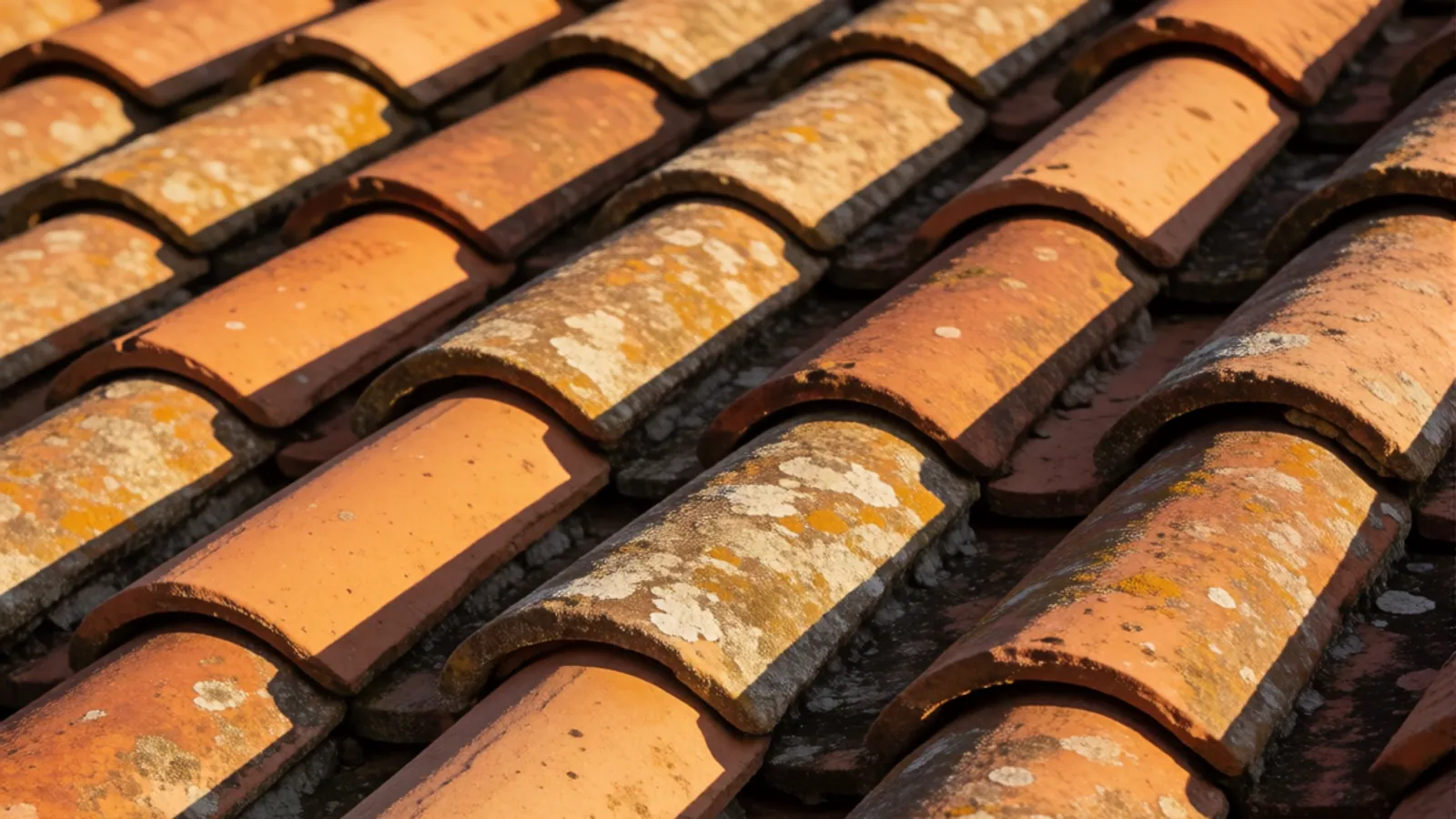
Clay and concrete tile
Best for
Buildings that already carry tile, and Mediterranean and Spanish-revival houses.
What is good about it
Extremely long-lived, unaffected by heat, and individual tiles can be swapped out one at a time by anyone who knows how.
What to watch
Weight again, and the underlayment beneath the tile is the real waterproofing — it usually needs replacing at fifty years even where every tile is still sound.
Flat and low-slope · $ · 10 – 20 years per application
Reflective roof coating
Best for
A flat roof that is sound but tired, where a full replacement is not in this year's budget.
What is good about it
The cheapest way to buy a decade. It seals fine cracks and weathered seams, and a white surface measurably reduces cooling costs and rooftop temperature.
What to watch
It is a coating, not a cure. Over wet insulation or a failed deck it hides a problem instead of fixing it, which is why we take moisture readings before quoting one.
Detail work · $$$$ · 70 – 100 years
Copper and architectural metal
Best for
Bay windows, dormers, porch roofs, gutters, finials and anything on a period building.
What is good about it
Hand-formed on site, effectively permanent, and it is what most of these details were originally made of. It weathers to a green patina that no other material imitates convincingly.
What to watch
Expensive and skilled, and it must be isolated from incompatible metals or it corrodes at the junction. Reserved for details and small areas rather than whole roofs.
Putting it together
What we would specify, and when
A Woodside row house with a pitched roof
Architectural asphalt shingle, six nails, all new flashing, ice and water barrier at the eaves and in the valleys, and balanced ridge and soffit ventilation. It is the right answer for the overwhelming majority of houses here.
A flat roof on a co-op or a shop
A white TPO single-ply, fully welded, with the drains rebuilt and tapered insulation anywhere the roof does not clear water within 48 hours. EPDM instead where the roof carries heavy foot traffic.
A sound flat roof with no budget for replacement
A silicone coating, after a moisture survey confirms the insulation underneath is dry. A quarter of the money and another decade of life — but only over a roof that is genuinely sound.
A building you intend to hold for decades
Standing-seam metal. Two to three times the up-front price and, over a fifty-year horizon, comfortably the cheaper decision.
A brownstone, a mansard or a church
Repair and re-nail the slate that is there, and renew the copper flashing around it. Stripping a repairable slate roof discards seventy years of remaining life and is very often the advice given by people who cannot work on slate.
A bay window, a porch roof or a dormer
Hand-formed copper. Expensive per square foot, small in area, effectively permanent, and it is what the detail was originally made of.
Not a showroom decision
Look at samples against your own building
Colour and profile look completely different on a brick Queens row house than they do on a sample board indoors. We will bring samples to the survey and hold them up against the wall.