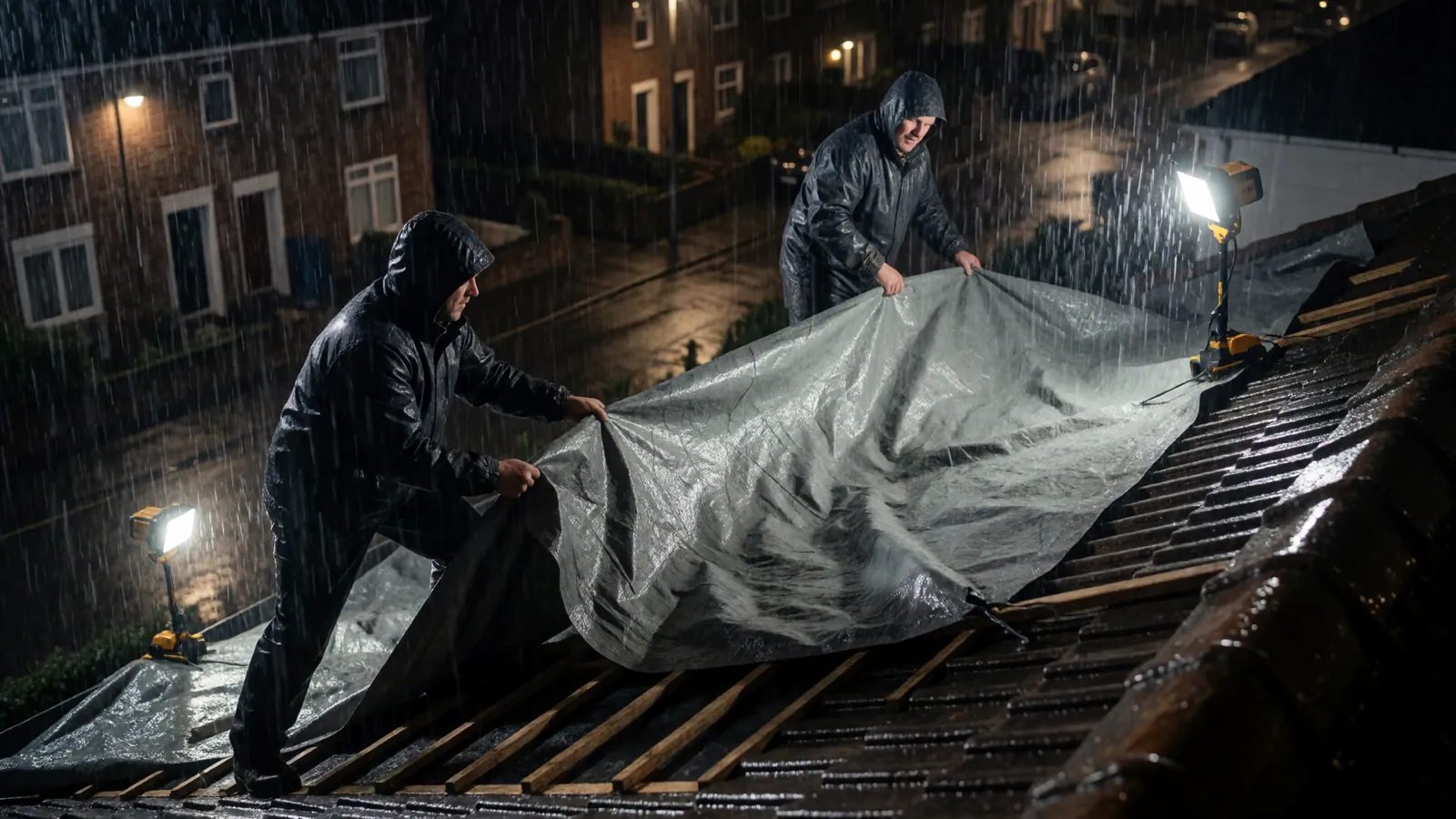
Water coming through the ceiling? The emergency line is answered by a person, 24 hours a day, every day of the year — we tarp and make safe first, and estimate in daylight. Call 000-000-0000
Emergency roofing is a different job from roofing. The goal at two in the morning is not a good roof — it is a dry building and a safe one. That means a properly lashed tarp over the opening, water diverted away from anything electrical, and an honest assessment of whether anybody should be sleeping under that part of the ceiling tonight.
It also means not selling you anything. We have all seen what happens after a bad storm: a crew arrives at midnight with a contract and a homeowner signs it while the ceiling is still dripping. We do not work that way. We make it safe, we give you a written record and photographs of what we found, and we come back in daylight to talk about the repair when you can think about it properly.
What counts as an emergency
Call the 24-hour line for any of these. If you are unsure, call anyway — we would far rather talk you through something that can wait until morning.
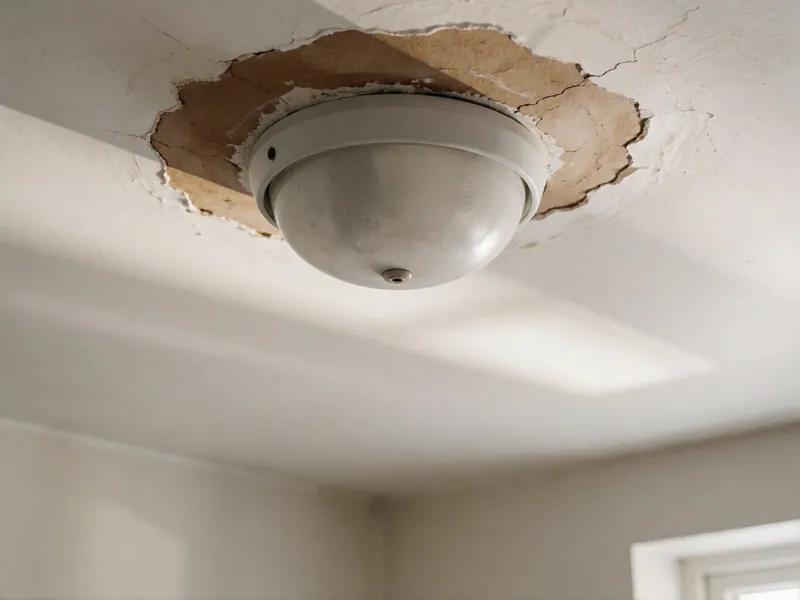
Water actively entering a living space
Especially through a ceiling light, near a consumer unit, or over a stairwell or a bed.
A bulging or sagging ceiling
A pocket of water sitting on plaster. Keep everybody out from under it. This one is genuinely dangerous.
Roof opened up by wind
Shingles or a membrane section gone and the deck or the interior exposed. Every hour of rain after that costs meaningfully more to put right.
Impact damage
A tree limb, scaffolding or debris through the roof. Do not go up to look.
A flat roof holding water with a blocked drain
Standing water is heavy — roughly five pounds per square foot per inch. A blocked drain in a long storm is a structural concern, not just a leak.
Fire or storm damage needing the building secured
We work alongside restoration contractors and adjusters routinely.
What we do when we arrive
In this order, every time, whatever the hour.
Make it safe before anything else
If water is near electrics, that circuit goes off before we do anything on the roof. Nobody works under a sagging ceiling and nobody goes on a roof in lightning.
Stop the water
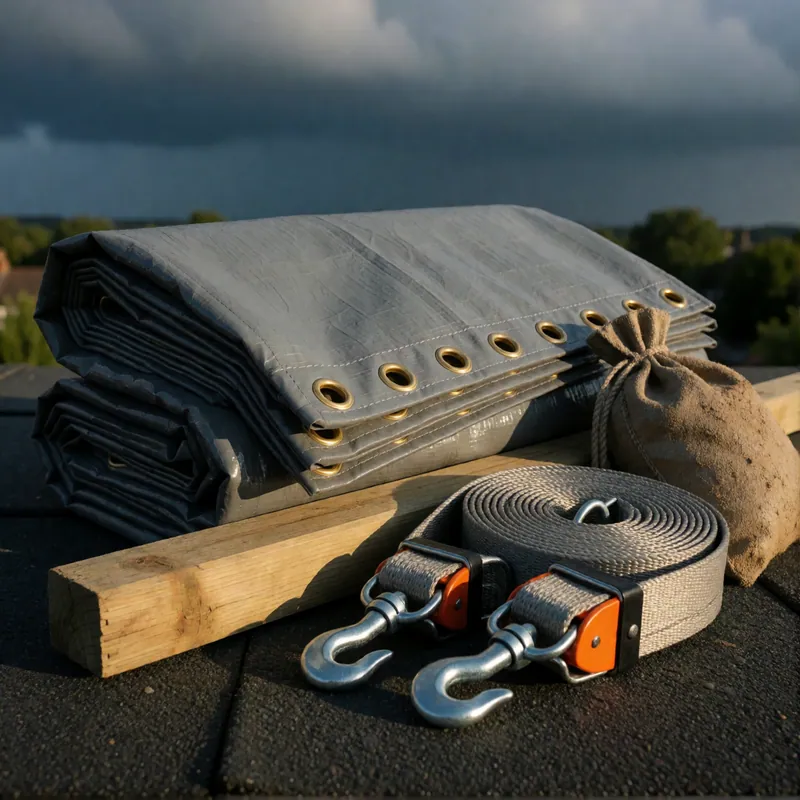
A heavy tarp, lashed over battens and weighted properly — not thrown over and hoped for. A tarp fitted the way we fit them holds through the rest of the storm and for weeks afterwards if it needs to.
Relieve trapped water
A bulging ceiling is drained deliberately, in one place, with containment underneath, rather than left to come down on its own.
Clear what is blocking drainage
On a flat roof this alone is frequently the whole emergency.
Document everything
Dated photographs of the damage as found, before anything is covered. This is what makes an insurance claim straightforward later, and it costs you nothing to have it done properly.
Leave you with a written record
What we found, what we did, and what still needs doing — on paper, that night. Not a contract to sign.
What to do before we get there
Fifteen minutes of this genuinely reduces what the damage costs. There is a fuller version on our roof leak checklist.
Move what matters
Electronics, documents and anything irreplaceable out from under the water first.
Kill the power to that area
If water is near a light, a fan or an outlet, switch that circuit off at the panel. Do not stand in water to reach a switch.
Contain it
A bucket, and a towel under the bucket. The splash does more damage to a floor than the drip does.
Drain a bulge deliberately
With a bucket underneath, a small hole at the lowest point of the bulge lets it out in a controlled way rather than all at once.
Photograph it before you tidy
Wide shots and close shots, with the date. Five minutes now saves an argument with an adjuster later.
Stay off the roof
In the dark, in the rain, in the wind. This is the part to call us for.
Please stay off the roof. Not in rain, not in wind, not at night, and not to fit a tarp — far more people are hurt each year on wet roofs than by the leaks they were trying to stop. Never touch a ceiling light, fan or outlet that water has reached; switch that circuit off at the panel from dry ground, and if you cannot do that safely, leave it and call an electrician. If a ceiling is bulging or sagging, keep everybody out from under it. General guidance on this page is not a substitute for somebody looking at your own roof.
Questions
24/7 Emergency Roofing — the questions we are asked most
Do you really answer the phone at 3am?
Yes, and a person answers it — one of our own people, not an answering service taking a message. In a major storm you may be in a queue, and we will tell you honestly roughly where you are in it rather than inventing a time we cannot keep.
How much does emergency roof tarping cost?
The after-hours call-out is $225 and covers arrival and assessment. Tarping is usually $650 upwards for an area up to about 300 square feet, more for large or steep roofs, and the price is always told to you before we begin. Emergency mitigation of this kind is covered by most policies.
Will you make me sign a contract that night?
No. We make the building safe, photograph everything and leave you a written record of what we found and did. The estimate for the permanent repair comes later, in daylight, when you can read it properly. Anyone asking for a signature while your ceiling is still dripping is not doing you a favour.
How long will a tarp last?
Fitted the way we fit them — over battens, lashed and weighted rather than draped — a tarp holds through the storm and for several weeks after it. It buys the time to dry the roof out, get an adjuster on site and do the permanent repair properly rather than in the rain.
Should I put a tarp up myself?
Please do not. A wet roof in wind at night is genuinely the most dangerous place around your house, and far more people are hurt fitting tarps than by the leaks they were trying to stop. Contain the water indoors, photograph it and call.
Is emergency work covered by insurance?
Emergency mitigation — tarping, drying out, making safe — is covered under most property policies, and insurers generally expect you to act promptly rather than wait for an adjuster. Keep every receipt and photograph the damage before anything is covered. Our insurance claims page explains where the line sits between what we do and what your adjuster does.
What if it is not actually an emergency?
We will tell you that on the phone, for free, and book you in for the morning instead. A slow drip into a bucket in a spare room at midnight is a next-day job, and we would rather say so than charge you an after-hours rate for it.
Related
Often needed alongside this
Leaks & Repairs
Roof Leak Repair
Finding where the water actually gets in — proven with a hose test, not guessed at — and then fixing that, once.
Read more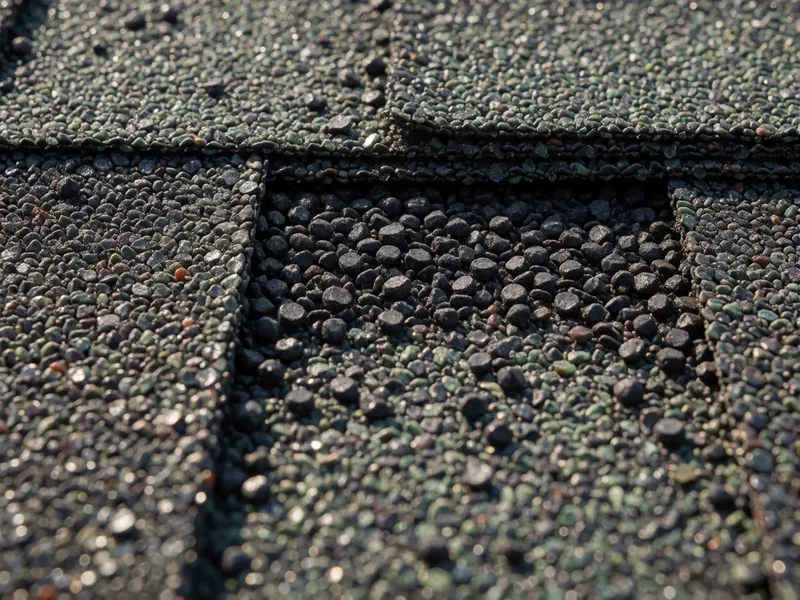
Leaks & Repairs
Storm & Wind Damage
Wind, hail and impact damage assessed and documented properly at the time of loss — which is what makes a claim straightforward.
Read more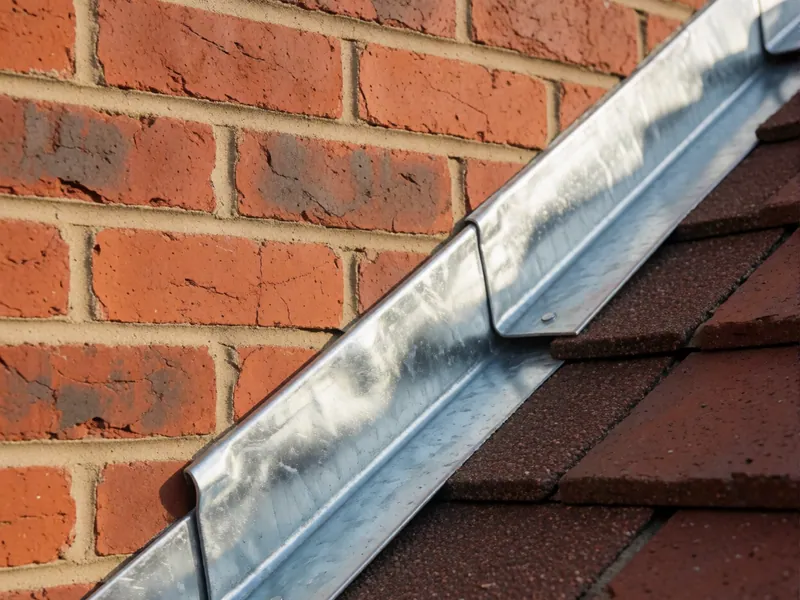
Leaks & Repairs
Flashing & Chimney Repair
The junctions where roofs actually leak — chimneys, walls, valleys and skylight kerbs — renewed rather than sealed over.
Read moreFree survey, written quote, fixed price
Get a roof quote, or call the 24-hour line
Tell us what you are seeing and we will tell you honestly whether it needs somebody tonight or whether it will keep until the morning. Surveys and written quotes are free, and leak diagnostics are $145, credited in full against any repair you approve.