Water coming through the ceiling? The emergency line is answered by a person, 24 hours a day, every day of the year — we tarp and make safe first, and estimate in daylight. Call 000-000-0000
A flat roof is not flat and it is not really a surface — it is a drainage system with a waterproof layer stretched over it. Once you look at it that way, everything follows: the slope has to take water somewhere, the somewhere has to be clear, and every place where the membrane stops or is interrupted is a joint that somebody has to have detailed properly.
That is why we survey before we price. Cutting two or three test squares and taking moisture readings tells us whether the insulation under the membrane is dry — and that single fact is the difference between a recover that will last twenty years and a coat of something expensive laid over a wet roof that is quietly rotting the deck beneath it.
The systems we install, and where each belongs
There is no single best flat roof. There is a best flat roof for your building, your budget and how long you intend to hold it.
TPO single-ply
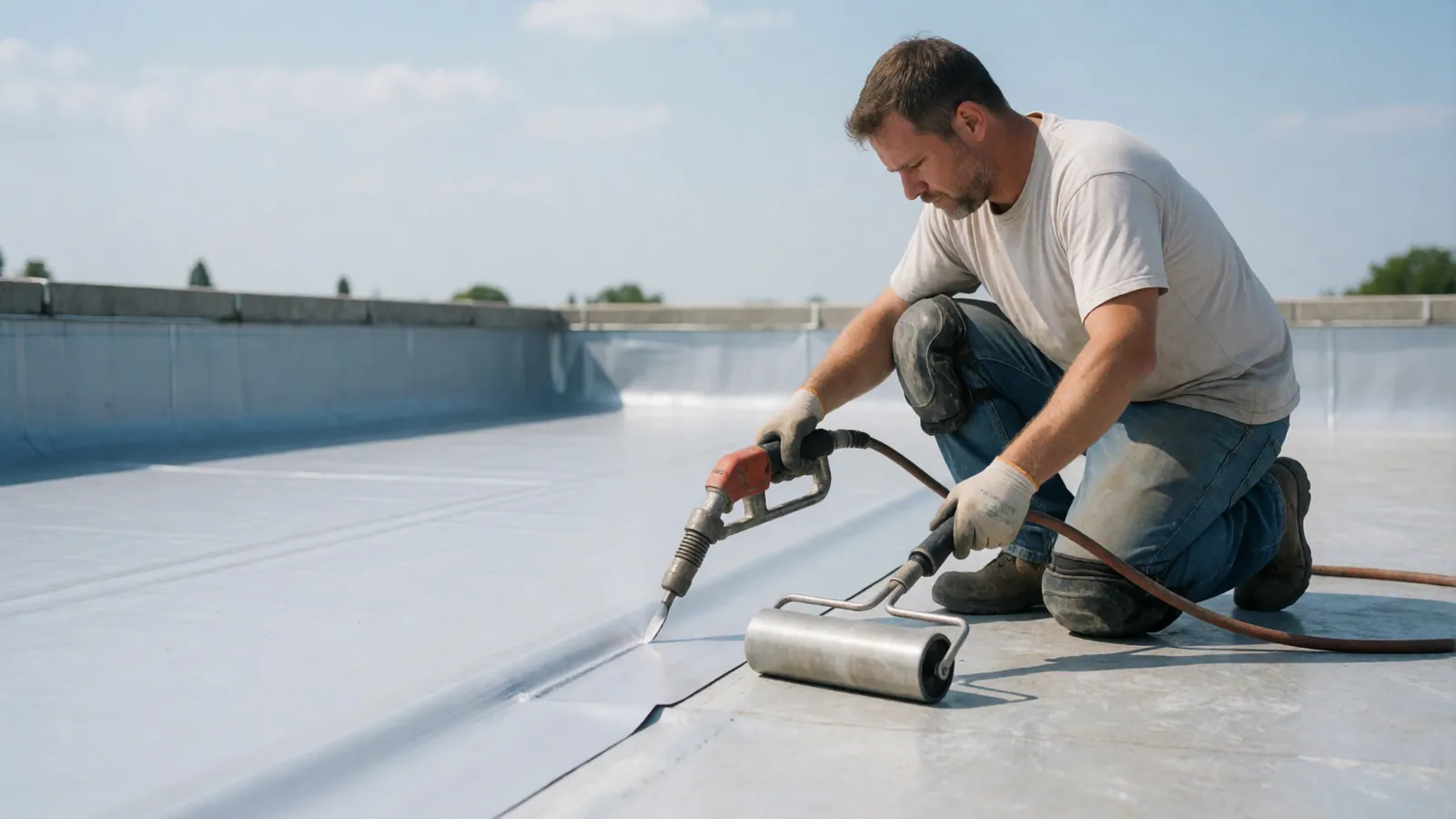
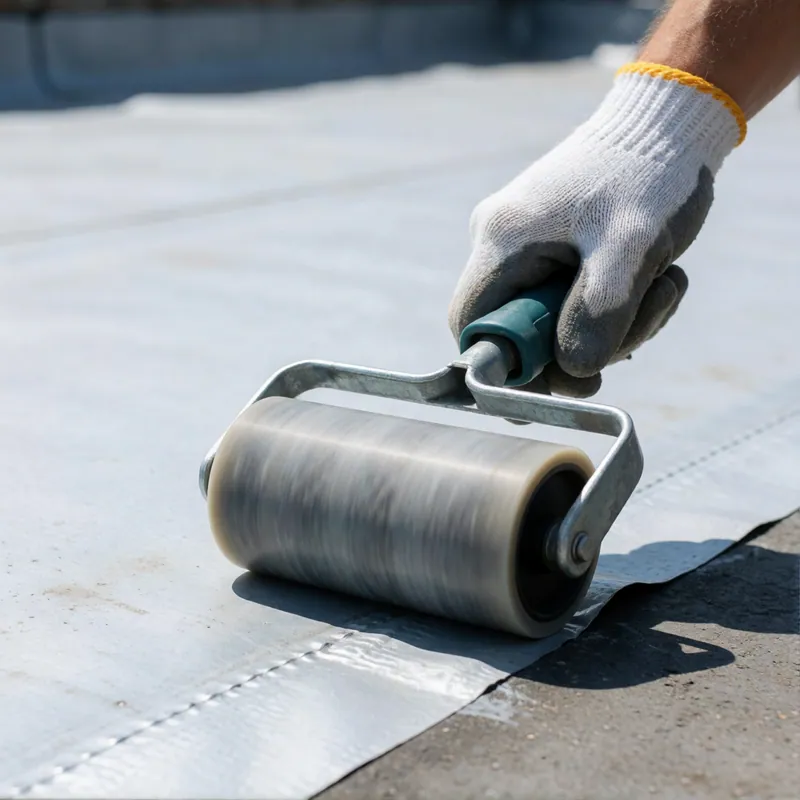
Heat-welded seams, a bright white surface that measurably cuts cooling load, and a clean, quick installation. Our default for most commercial and multi-family recovers.
EPDM single-ply
The black rubber roof. Extremely durable, very forgiving of movement and temperature swing, and simple to repair. Excellent where a roof takes foot traffic or carries equipment.
Modified bitumen
Multi-ply and tough, and the right answer where we are matching an existing built-up roof or where the roof sees regular access. We favour self-adhered and cold-applied systems over torch work on occupied buildings.
Built-up roofing
The traditional layered roof still found across older Queens buildings. We repair and extend it routinely and will recommend it where a building's details suit it.
Tapered insulation
Where a roof genuinely does not drain — and many old ones do not — insulation cut to a fall is what fixes it. Everything else is managing a puddle.
Reflective coatings
Not a roof, but a way of buying ten more years from a sound one. Covered fully on our roof coatings page, and only ever quoted after a dry moisture reading.
Where flat roofs actually leak
In thirty years we have almost never found a leak in the open field of a membrane. It is always one of these.
Seams
The weld between two sheets. Every seam we install is probed with a blunt tool along its whole length before we leave, which finds a cold weld that looks perfect.
Drains and scuppers
A blocked drain turns a roof into a shallow pool, and standing water finds every marginal detail within a season. Drain bowls need clamping rings, proper flashing and clear leads.
Penetrations
Pipes, conduits, vents, gas lines, satellite mounts. Anything that goes through the roof needs a proper boot or a pitch pocket, not a bead of sealant.
Terminations and parapets
Where the membrane stops and turns up a wall, held by a termination bar and a counter-flashing or coping. Failed coping joints are one of the most common causes of a top-floor leak that looks like it is coming from the roof.
Rooftop equipment curbs
Condensers, fans and hatches sit on curbs that have to be flashed like small buildings. They rarely are.
Foot traffic damage
Anyone servicing rooftop equipment walks the roof. Walkway pads along the routes people actually use cost very little and prevent a great deal.
Survey, recover or replace
Three genuinely different jobs, and the survey is what tells you which one you need.
Moisture survey
Test cuts and meter readings across the roof, mapped. Dry insulation means a recover is legitimate; wet insulation means anything laid over it is a waste of money.
Repair
Seams, drains, penetrations and parapets, on a roof whose field is sound. Frequently the right answer and frequently five to fifteen years' worth of it.
Recover
A new membrane over the existing roof where the insulation is dry and only one layer is present. Faster, cheaper, and it avoids opening the building.
Full tear-off
Down to the deck. Necessary where insulation is wet, where two layers already exist, or where the deck itself needs attention. More expensive, and the only honest option on a saturated roof.
Questions
Flat & Low-Slope Roofing — the questions we are asked most
How long does a flat roof last?
A properly installed single-ply membrane lasts 20 to 30 years, modified bitumen 15 to 25. The variable that matters most is not the material but the drainage: a roof that clears water within 48 hours of rain reaches the top of that range, and a roof that ponds year-round will not reach the bottom of it.
Can my flat roof be recovered instead of replaced?
Only if the insulation under the existing membrane is dry and only one layer is present. That is what the moisture survey establishes, and it is why we will not quote a recover from the pavement. Laying a new membrane over wet insulation traps the water against the deck and turns a roof problem into a structural one.
Why does water sit on my roof after it rains?
Either the roof was built with insufficient fall, or the insulation has compressed, or the drains are blocked or set too high. Water standing more than 48 hours is called ponding, it accelerates membrane ageing, it adds real weight, and it is fixed with tapered insulation or by correcting the drainage — not by adding more coating on top.
What is the difference between TPO and EPDM?
TPO is white, heat-welded at the seams, and reflects a lot of solar heat, which lowers cooling costs. EPDM is black rubber with adhered or taped seams, extremely durable and very tolerant of movement and temperature swing. We specify TPO more often for cooling benefit, and EPDM where a roof sees heavy foot traffic or complex detailing.
My roof was coated two years ago and it still leaks. Why?
Almost always because the coating went over a wet roof, or over a failed seam or detail that a coating cannot bridge. A coating is a maintenance product for a sound roof, not a repair for a failed one. A moisture survey will show you what is actually underneath it.
Can you work on the roof while the building is occupied?
Yes, and most of our commercial work is on occupied buildings. Self-adhered and cold-applied systems avoid torches and most of the odour; we sequence so the roof is watertight at the end of every day; and work over sensitive tenants is scheduled before nine or after six by arrangement.
Do you handle roof drains and internal leaders?
Yes — bowls, clamping rings, flashing, strainers and the run of the leader itself. Drains are the highest-value maintenance item on any flat roof and the cheapest thing on it to get wrong.
Related
Often needed alongside this
Roof Replacement & Installation
Roof Replacement
A complete tear-off and rebuild with a fixed price, a written scope, and the decking priced before we ever open the roof.
Read more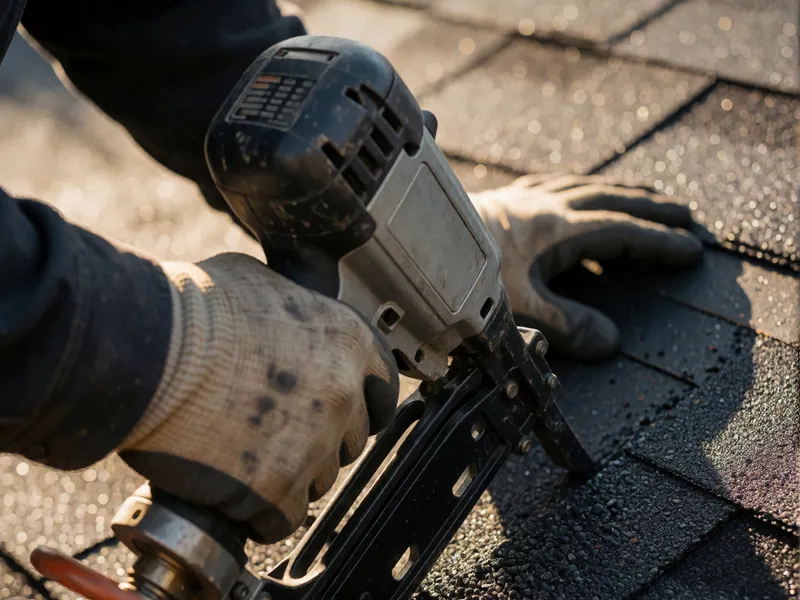
Roof Replacement & Installation
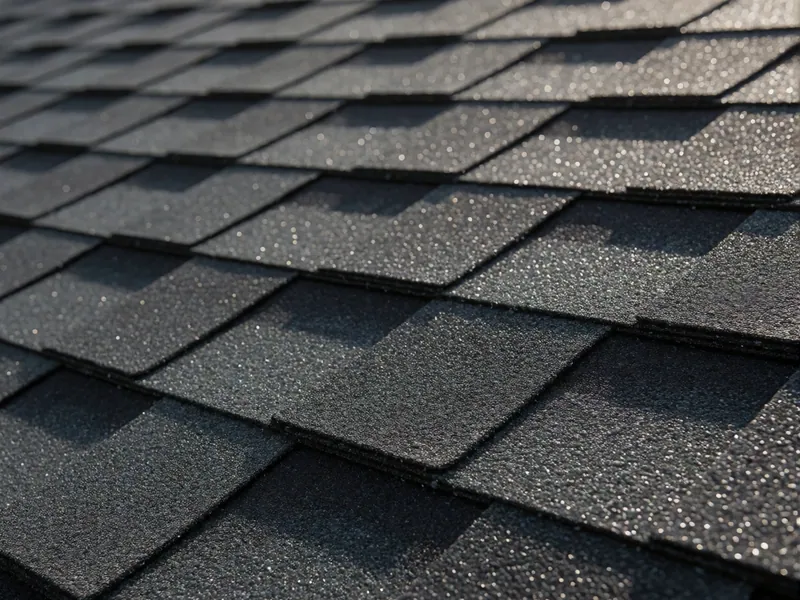
Asphalt Shingle Roofing
The default roof for most of Queens, installed with the flashing and ventilation details that decide whether it lasts fifteen years or thirty.
Read more
Roof Replacement & Installation
Metal Roofing
Standing-seam and architectural metal, site-formed with concealed fasteners — the longest-lived roof short of slate.
Read moreFree survey, written quote, fixed price
Get a roof quote, or call the 24-hour line
Tell us what you are seeing and we will tell you honestly whether it needs somebody tonight or whether it will keep until the morning. Surveys and written quotes are free, and leak diagnostics are $145, credited in full against any repair you approve.