Water coming through the ceiling? The emergency line is answered by a person, 24 hours a day, every day of the year — we tarp and make safe first, and estimate in daylight. Call 000-000-0000
There is a great deal of slate and tile in this part of Queens — on brownstones, on mansards, on churches and on the better pre-war houses — and much of it has been quoted for replacement by people who cannot work on it. The advice is nearly always the same: strip it and put shingle on. Sometimes that is genuinely right. Far more often it is a hundred-year roof being ended at sixty because the person looking at it only has one trade.
The distinction that matters is between the slate and everything around it. Slate itself has a service life measured in the high decades or centuries depending on the quarry it came from. The copper nails holding it, the flashing in the valleys and at the chimneys, and the underlayment beneath will all reach the end of their lives long before it does. Renewing those is a restoration. Ripping the slate off is a demolition.
The work this actually involves
Slow, careful and done from hook ladders and staging rather than by walking the roof — which cracks slates faster than weather ever will.
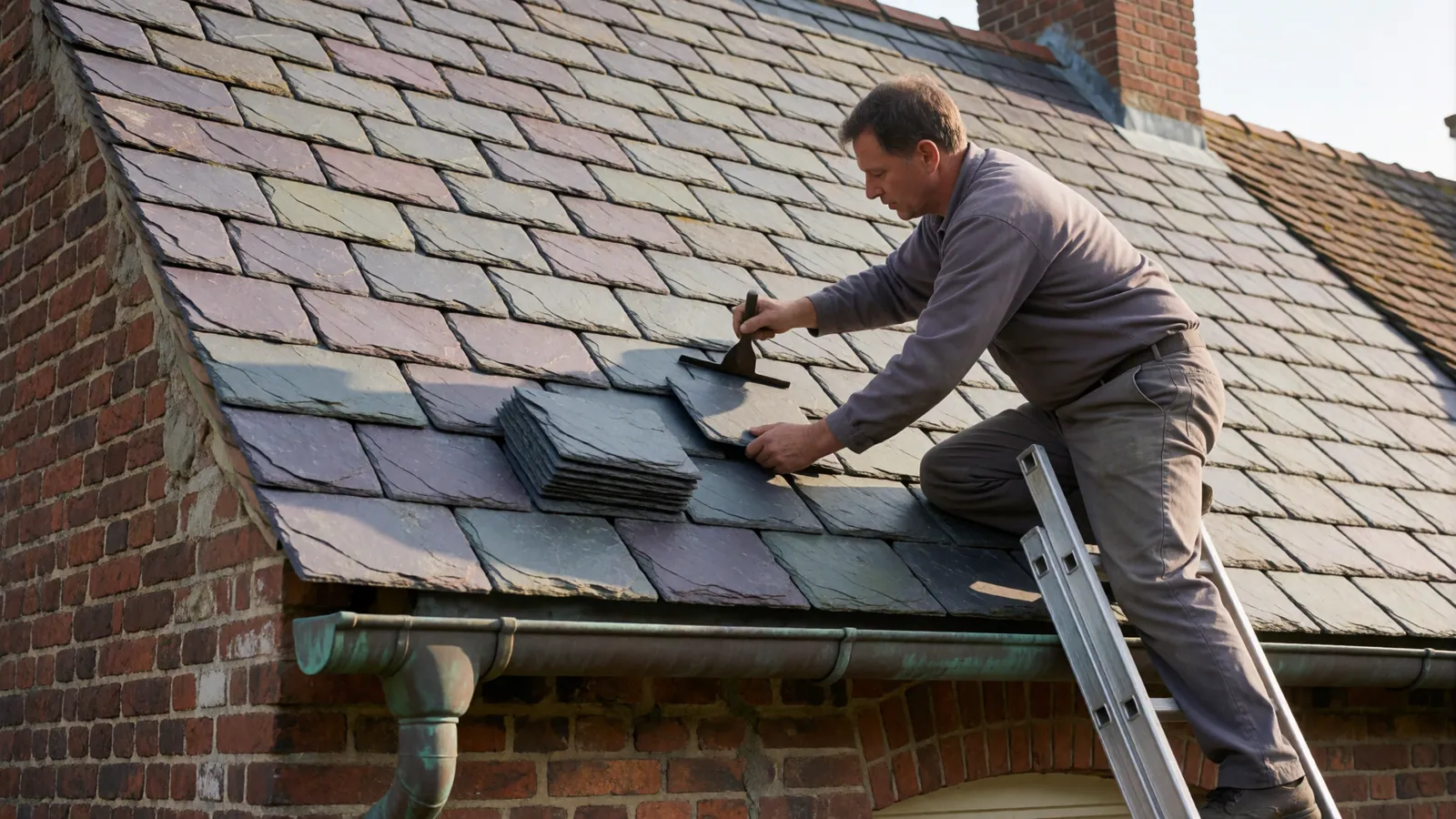
Individual slate replacement
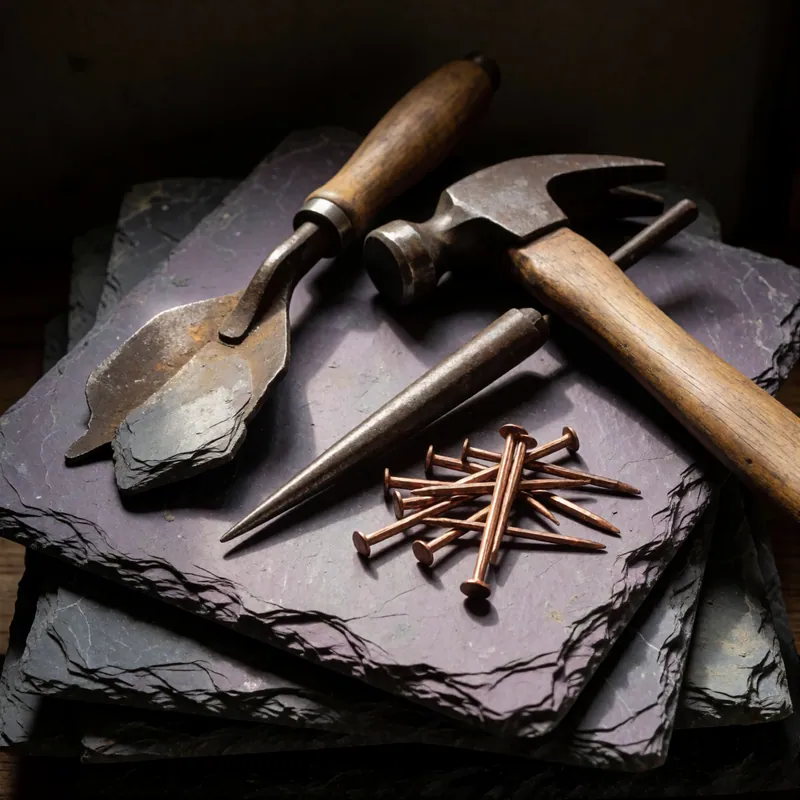
A slate ripper cuts the old nails, the replacement goes in on a copper hook or a nailed strap. One slate at a time, without disturbing its neighbours.
Matching salvaged material
New slate rarely matches an old roof in colour or thickness. We keep salvaged stock and source by quarry and size, and we will show you a match on the roof before it goes on.
Nail sickness
Where the original nails have corroded through, slates start sliding off a roof that is otherwise perfect. This is a re-nailing project, not a replacement — and knowing the difference saves a great deal of money.
Copper flashing and valleys
Slate roofs want copper. It lasts on the same timescale as the slate and it does not react with it. Valley and chimney metal is what usually needs doing on an old slate roof.
Mansards and steep slopes
Common on Queens brownstones. Steep, visible from the street, and unforgiving of a repair that does not match.
Clay and concrete tile
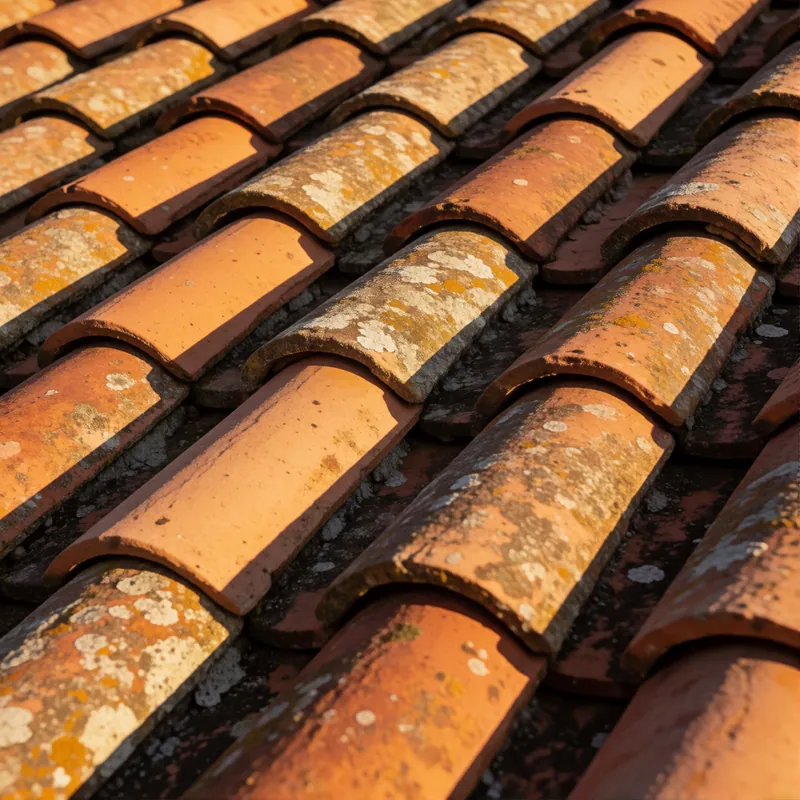
Individual tiles swapped, hips and ridges re-bedded, and the underlayment beneath renewed where it has reached the end of its life while the tile has not.
Ridge and hip work
Re-bedding and re-pointing with a lime-based mortar that stays flexible, rather than a hard modern mix that cracks and drops.
Full re-slating with salvage
Where a roof genuinely must come off, the sound slate is lifted, sorted and re-laid over new underlayment with new copper — typically half to two-thirds re-used.
When slate genuinely is finished
It does happen, and we will say so. These are the findings that end a slate roof.
Delamination
Slate splitting into layers along its bedding plane, often with a chalky feel. Common in softer slates at the end of their life and not repairable.
Widespread flaking and softness
A slate that can be marked with a thumbnail or that sounds dull rather than ringing when tapped has failed.
More than about 20% failed across the roof
Below that, repair is comfortably the better value. Above it, the economics turn and a re-slate with salvage starts to make sense.
Structural inadequacy
Slate is heavy. Where a roof structure has been altered or has deflected, that needs addressing before anything goes back on it.
A deck that has failed beneath it
Usually from years of a leak nobody dealt with. The slate can be salvaged; the boarding beneath cannot.
Working on a historic building
Most of this work is on buildings that people care about, sometimes in a district with rules about what may be done to them.
Match what is there
Size, thickness, colour, exposure and the coursing pattern. A repair that is technically sound and visibly wrong is a failed repair on a front elevation.
Keep the details
Snow guards, finials, ornamental ridges, decorative courses and copper cresting are usually salvageable and rarely replaceable.
Lime mortar, not cement
On old masonry the mortar is meant to be softer than the brick or stone so that it takes the movement. Hard cement pointing damages what it is supposed to protect.
Landmark and district approvals
Where a building is in a historic district, work on visible elevations may need approval. We will tell you whether yours does before you commit to anything.
Phasing for a committee budget
Churches and community buildings often need the work split across several years. We will write a scope that phases sensibly by elevation and by urgency.
Slate & Tile Roofing in western Queens
Slate, clay and concrete tile repaired and re-laid by people who know that the flashing usually fails fifty years before the slate does.
Every job of this kind starts the same way: somebody climbs it, photographs it, and writes down what is actually wrong before anybody quotes a price. The survey is free, the report is yours, and you are under no obligation to use us for the work it recommends.
Please stay off the roof. Not in rain, not in wind, not at night, and not to fit a tarp — far more people are hurt each year on wet roofs than by the leaks they were trying to stop. Never touch a ceiling light, fan or outlet that water has reached; switch that circuit off at the panel from dry ground, and if you cannot do that safely, leave it and call an electrician. If a ceiling is bulging or sagging, keep everybody out from under it. General guidance on this page is not a substitute for somebody looking at your own roof.
Questions
Slate & Tile Roofing — the questions we are asked most
Is my slate roof worth repairing?
Almost always, if less than about a fifth of the slates have genuinely failed. Slate has a service life measured in generations, and what usually fails first is the nails, the flashing and the underlayment. Replacing a repairable slate roof with shingle discards decades of remaining life — get a proper slate assessment before accepting anyone's advice to strip it.
Someone told me my slate roof needs replacing. Should I get a second opinion?
Yes, from someone who actually works on slate. It is a specialist trade and a contractor who only installs shingle will honestly, and quite often wrongly, tell you that a slate roof is finished. Ask specifically whether the slates themselves have failed or whether it is the nails and flashing — the two have very different answers and very different prices.
What is nail sickness?
The original nails corroding through while the slate remains perfectly sound. Slates begin sliding off a roof that looks fine, usually a few at a time after windy weather. It is a re-hanging project rather than a re-roofing one, and it is a very common misdiagnosis.
Can you match my existing slate?
Usually. New slate rarely matches an old roof in colour or thickness, so we work from salvaged stock and source by quarry and size where we can. We show you the match on the roof before fitting it — particularly on a front elevation, where a technically sound repair that looks wrong is not a success.
How much does slate repair cost?
Individual slates are $85 to $145 each fitted, and larger work runs at a day rate of $1,450 for a two-person crew with the necessary access. Copper valleys start around $2,200. Access and pitch move these numbers far more than the area of the roof does, which is why slate is always quoted after an inspection.
Do you work on clay and concrete tile?
Yes — individual tile replacement, re-bedding hips and ridges in lime mortar, and renewing the underlayment beneath. On a tile roof the underlayment is the actual waterproofing and typically needs replacing at around fifty years even when every tile is still perfectly sound.
My building is in a historic district. Does that affect the work?
It may, particularly on elevations visible from the street. We will tell you at survey whether your work is likely to need approval and what the practical implications are. We routinely match materials and details to what is already there, which is usually most of what is being asked for anyway.
Related
Often needed alongside this
Specialist, Commercial & Systems
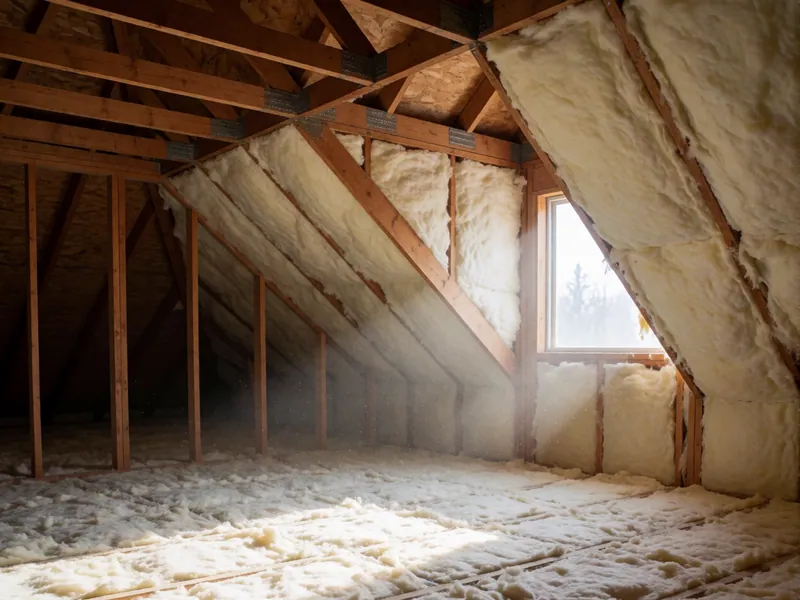
Attic Ventilation & Insulation
Balanced intake and exhaust — the single biggest factor in how long a roof lasts, and the reason ice dams form at all.
Read more
Specialist, Commercial & Systems
Skylights & Roof Windows
New skylights, replacements and the re-flashing that fixes the ones leaking now — because it is almost never the glass.
Read more
Specialist, Commercial & Systems
Commercial & Multi-Family
Flat roofs on occupied buildings, managed as an asset — surveys, planned maintenance, and work sequenced around tenants.
Read moreFree survey, written quote, fixed price
Get a roof quote, or call the 24-hour line
Tell us what you are seeing and we will tell you honestly whether it needs somebody tonight or whether it will keep until the morning. Surveys and written quotes are free, and leak diagnostics are $145, credited in full against any repair you approve.