Water coming through the ceiling? The emergency line is answered by a person, 24 hours a day, every day of the year — we tarp and make safe first, and estimate in daylight. Call 000-000-0000
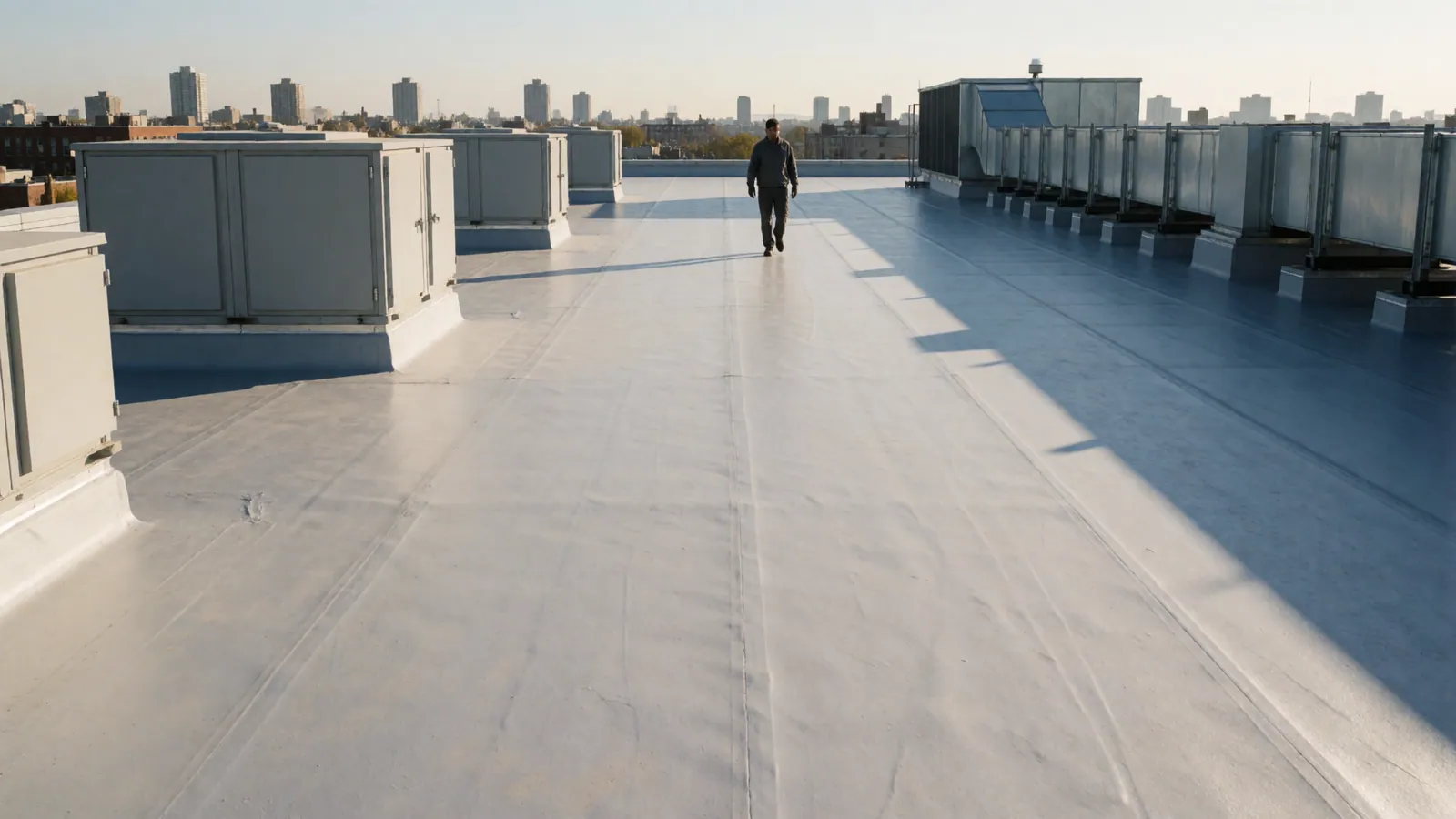
Most of what makes commercial roofing difficult is not the roofing. It is that the building is occupied, that somebody is answerable to a board or an owner, that the certificates of insurance have to be right before anyone arrives, and that a leak into a commercial tenant's space is a business interruption rather than an inconvenience.
So the technical work is the straightforward half. The other half is documentation and sequencing: photographs against every invoice, reports written to be read at a meeting, a spend forecast that lets a reserve be funded properly, and crews who work before nine or after six when that is what the tenants need.
What we do for buildings
From a single leak call to a managed roof programme across several properties.
Condition surveys and moisture mapping
The starting point for any building we do not already know. Meter readings, test cuts, drains, parapets and equipment curbs, mapped and photographed.
Planned maintenance
Quarterly visits with drains flow-tested, seams surveyed and everything documented. This is where the money is saved.
Repairs
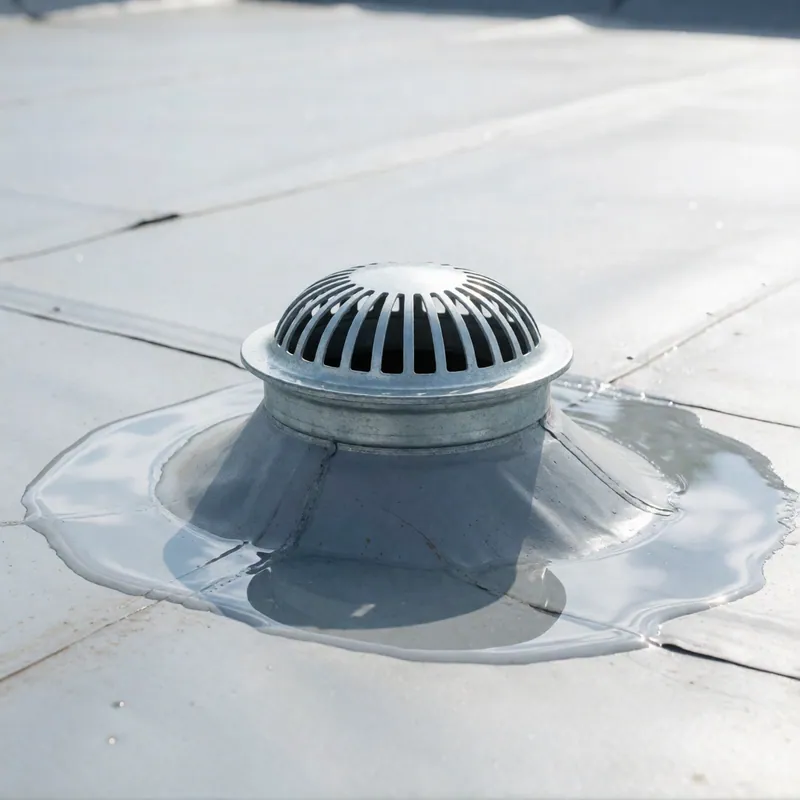
Seams, penetrations, terminations, drains, coping and equipment curbs. Most commercial leaks are one of these six.
Recover and replacement
Single-ply, modified bitumen and built-up systems, with tapered insulation where drainage needs correcting.
Reflective coatings
Where the roof is sound and the budget is not ready for a replacement — always after a dry moisture reading.
Emergency response
Four-hour target for plan holders, 24 hours a day. Tarping, drain clearing and making safe.
Capital planning
Remaining-life estimates and a ten-year spend forecast, in a form that goes into a reserve study without being rewritten.
Warranty and due diligence support
Documented maintenance history for manufacturer warranties, insurance and building sales.
Working on an occupied building
The operational side, which is what most owners are actually worried about.
Insurance and documentation first
Certificates of insurance, additional insureds and any building-specific requirements in place before the first visit, not chased afterwards.
Access agreed in advance
Roof access, hatches, keys, lifts and where materials can be staged, settled with the super or the agent before a crew arrives.
Tenant notice
We will draft the notice for you if that helps. Tenants who know what is happening make far fewer complaints than tenants who do not.
Hours that suit the building
Before nine, after six, or at weekends where tenants need it. Odour-free cold-applied and self-adhered systems on occupied buildings wherever possible.
Watertight at the end of every day
We open only what we can close. On an occupied building this is not negotiable.
Clean and secured daily
Debris contained, the roof left safe, and access points secured every evening.
Photographs with every invoice
So an agent can show a board exactly what was paid for without having gone up there themselves.
How building roofs actually fail
Almost never in the field of the membrane. Knowing this is what makes a maintenance programme worth funding.
Blocked drains and no overflow path
The most expensive failure mode there is, because standing water is a structural load as well as a leak.
Seams and terminations
Cold welds, failed adhesive laps and termination bars that have loosened as the building moves.
Equipment curbs
Condensers, fans, hatches and antennas sitting on curbs that need flashing like small buildings and rarely got it.
Penetrations added later
Every cable, conduit and gas line run across a roof by a contractor with a caulk gun and no roofing knowledge.
Coping and parapets
Failed coping joints, which produce top-floor leaks that get blamed on the roof for years.
Foot traffic
Anyone servicing rooftop equipment walks the roof. Walkway pads on the routes people actually use cost very little and prevent a great deal.
Deferred maintenance
The compounding one. A roof that has had nothing done to it for eight years does not need eight years of maintenance — it needs a replacement.
Questions
Commercial & Multi-Family — the questions we are asked most
Do you work with managing agents and co-op boards?
Constantly — it is a large share of what we do. Certificates of insurance on file before we arrive, additional insureds named where a building requires it, photographs against every invoice, and annual reports written in plain English with a spend forecast so a board can minute a decision without needing it translated first.
Can you work while the building is occupied?
Yes, and nearly all our commercial work is on occupied buildings. We use cold-applied and self-adhered systems to avoid torches and most of the odour, we sequence so the roof is watertight at the end of every day, and we work before nine or after six by arrangement where tenants need it.
How often should a commercial flat roof be inspected?
Quarterly, plus after any significant storm. Flat roofs fail at drains, seams, terminations and equipment curbs, and every one of those is caught cheaply on a scheduled visit and expensively once water is inside. Quarterly inspection is also what most manufacturers require to keep a warranty alive.
What is the emergency response time?
Four hours for commercial plan holders and two hours for multi-family plan holders, 24 hours a day. For anyone else we come as soon as a crew is free, and in a widespread storm we will tell you honestly where you are in the queue rather than promising a time we cannot keep.
Can you help us budget for a roof replacement?
That is what the reserve study section is for: a remaining-life estimate with the reasoning behind it, and a ten-year spend forecast covering maintenance, likely repairs and the eventual replacement. It is written to drop into a reserve study or a capital plan as it stands.
Our roof leaks but nobody can find where.
Common on commercial roofs, because water travels a long way across a deck before it appears inside. We survey with moisture readings to find where the deck is actually wet, which usually narrows it to a small area, then flood-test or hose-test that area to prove the entry point before repairing anything.
Do you handle warranty documentation?
Yes. Manufacturers' warranties on commercial systems almost always require documented maintenance, and neglect is much the most common reason a claim is refused. Our maintenance reporting is written to satisfy exactly that requirement, and we keep the history available for insurance and for due diligence when a building changes hands.
Related
Often needed alongside this

Specialist, Commercial & Systems
Slate & Tile Roofing
Slate, clay and concrete tile repaired and re-laid by people who know that the flashing usually fails fifty years before the slate does.
Read more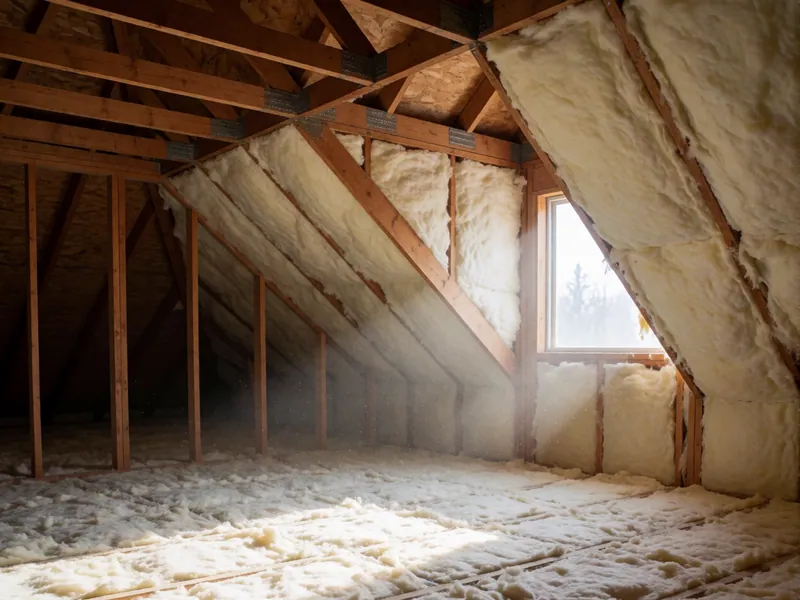
Specialist, Commercial & Systems
Attic Ventilation & Insulation
Balanced intake and exhaust — the single biggest factor in how long a roof lasts, and the reason ice dams form at all.
Read more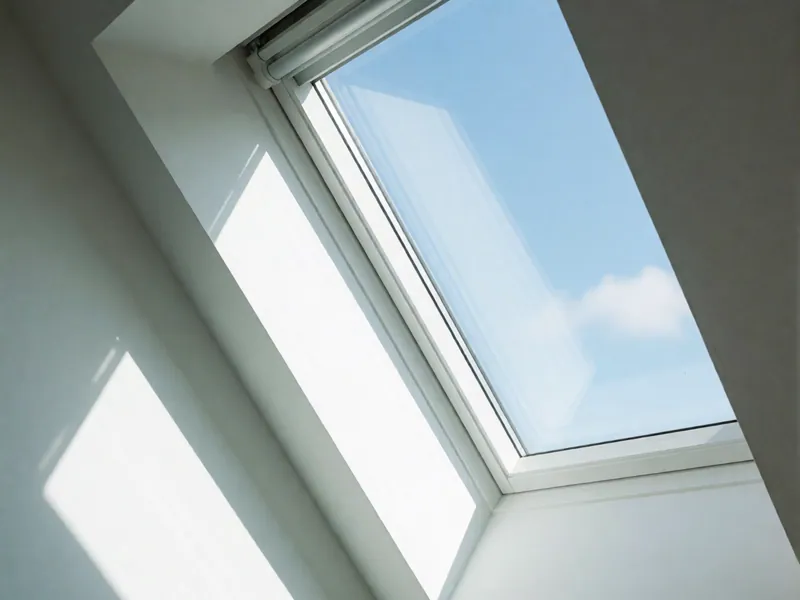
Specialist, Commercial & Systems
Skylights & Roof Windows
New skylights, replacements and the re-flashing that fixes the ones leaking now — because it is almost never the glass.
Read moreFree survey, written quote, fixed price
Get a roof quote, or call the 24-hour line
Tell us what you are seeing and we will tell you honestly whether it needs somebody tonight or whether it will keep until the morning. Surveys and written quotes are free, and leak diagnostics are $145, credited in full against any repair you approve.